What Is Bible Journaling? A Beginner’s Guide to Starting Your Own Bible Journal
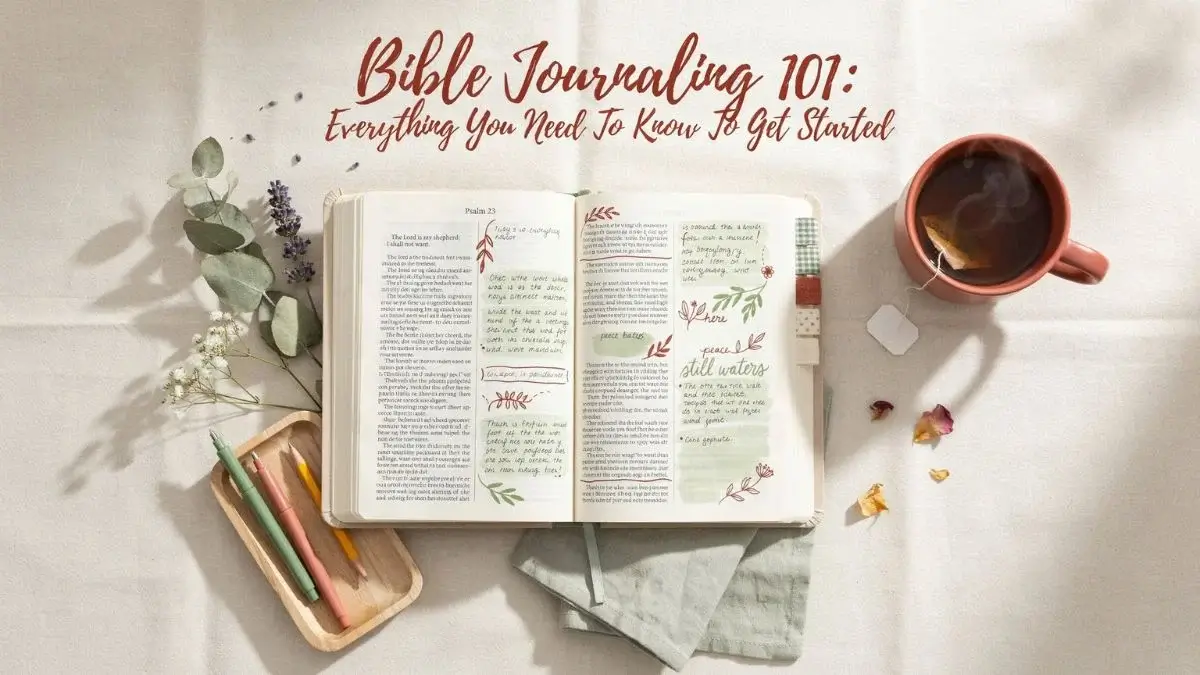
If you’ve ever scrolled past a dreamy, hand-lettered Bible page — soft watercolor verses, neatly tabbed margins, a cozy flatlay with a coffee cup and an open journal beside it — you’ve probably wondered how to start Bible journaling for yourself.
The good news? Bible journals aren’t about being artistic, and it isn’t about creating picture-perfect bible pages. It’s a simple, personal way of slowing down with Scripture that anyone can start today, with whatever you already have on hand.
In this beginner’s guide to Bible journaling, we’re covering everything you need to know: what Bible journaling really is, why so many people find it meaningful, what you need (and don’t need) to get started.
On top of that, we’ll show you different Bible journaling techniques and approaches you can try, what to actually write when the page feels blank, common mistakes to avoid, and practical Bible journaling tips to help your practice stick.
Whether you’re drawn in by the aesthetic, the spiritual practice of sitting with Gods word, or a little bit of both — you’re in the right place. Let’s start with the basics.
What Is Bible Journaling?
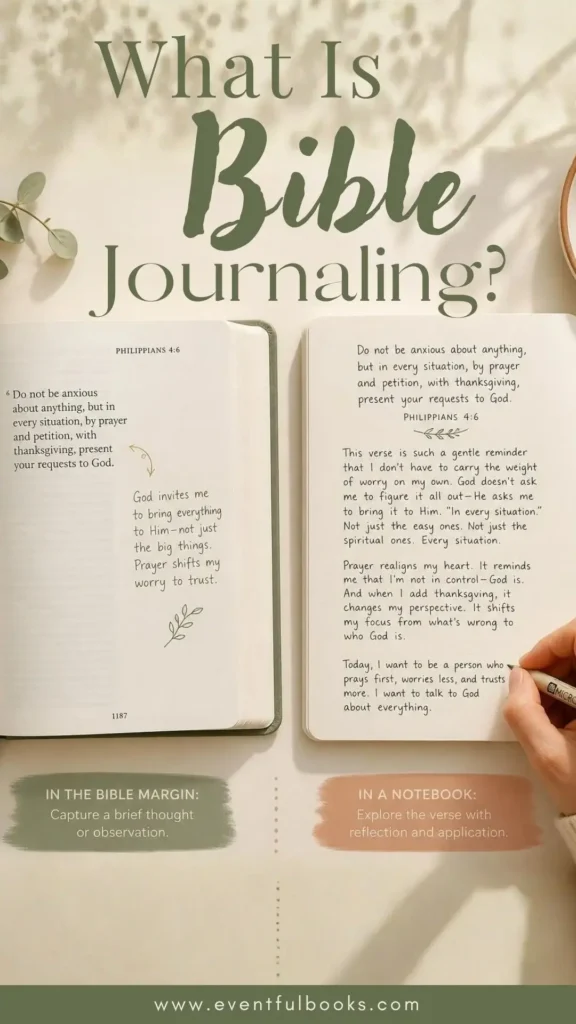
Bible journaling is a creative, personal way to engage with biblical text by writing, reflecting, and sometimes drawing directly alongside the bible text — either in the margins of your Bible or in a separate notebook.
Rather than simply reading a passage and moving on, you pause to respond to the scripture in your own words: what it means, how it lands, what it stirs up.
It’s less about the finished page and more about the practice itself — a way of slowing down and letting the Scripture writing become something you actually engage with from your own personal perspective.
Two things are worth understanding before you start: why people find the practice meaningful in the first place, and how it differs from more traditional ways of studying the Bible you may already be familiar with.
Both shape how you’ll approach your own journal, so it’s worth touching on each before moving further into the practical side of getting started.
What Is the Point of Bible Journaling?
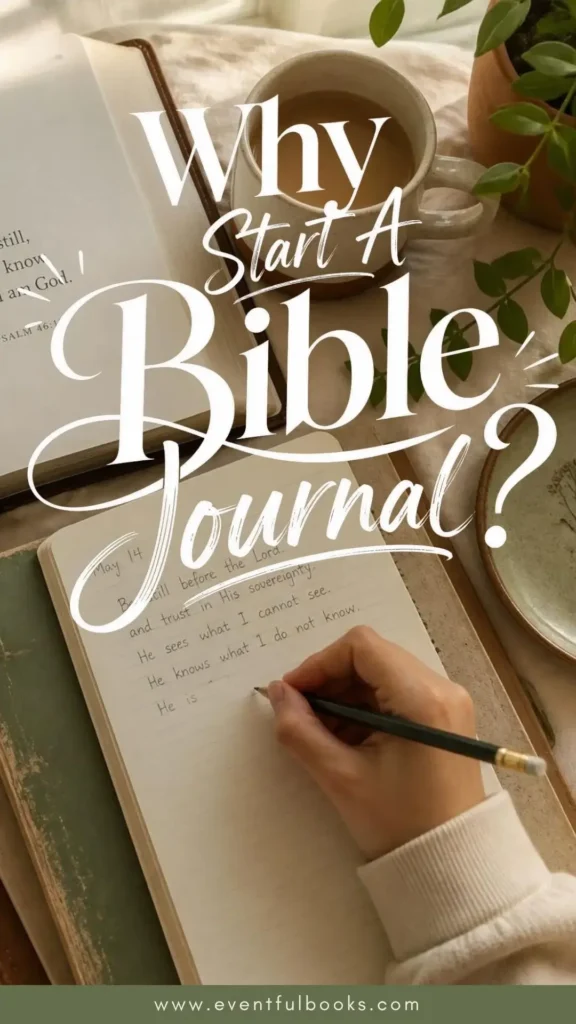
At its heart, Bible journaling exists to help believers deepen their faith. It’s easy to read a passage of Scripture the same way you’d scroll through anything else — eyes moving fast, mind already thinking about the next thing you have to do that day.. but journaling interrupts that.
The simple act of picking up a pencil and writing something down, even just a single verse, forces your mind to stay in one place a little longer than it normally would.
That slowing down does a few things. It helps you actually notice details in the text you might otherwise skim past — a word that repeats, a phrase that catches you off guard, a question you didn’t know you had.
It also turns Scripture from something you passively receive into something you respond to. Instead of just reading that God is your refuge, you’re writing down what that means for the specific chapter of your own spiritual journey.
Over time, a Bible journal becomes more than just creative worship, it becomes a record. A way for you to flip back through old entries months or years later, and you’re not just seeing bible verses — you’re seeing where you were at the time, what you were carrying, how God met you there and how your faith has grown.
Many people find that’s the real, lasting value of this practice — not the pages themselves, but the honest, ongoing conversation that they capture.
How Is Bible Journaling Different from Regular Bible Study?
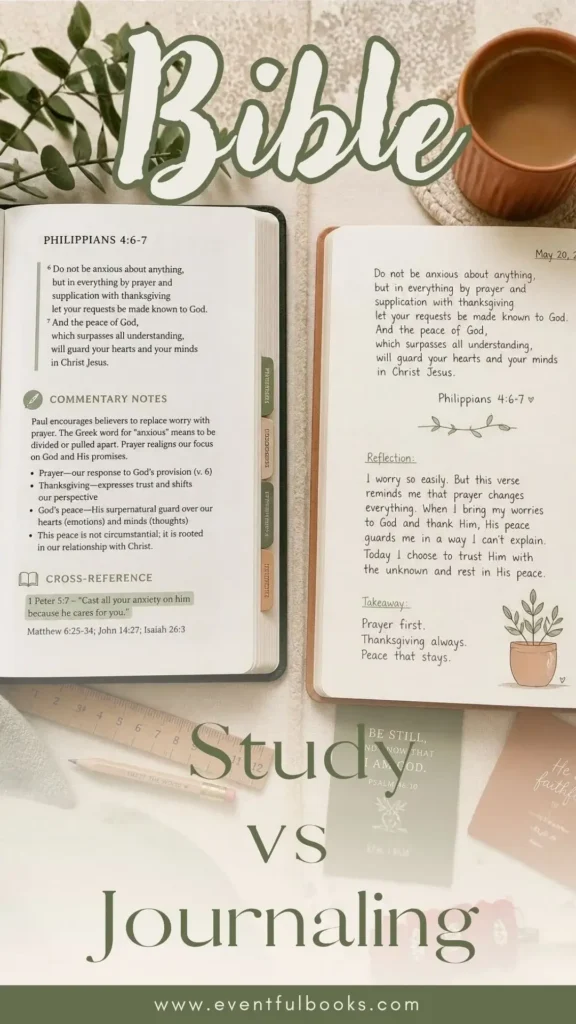
If you’ve done traditional Bible studies before — following a workbook, working through a passage verse by verse, maybe using commentaries to understand the historical or theological context — Bible journaling can feel like a completely different animal at first. And in some ways, it is.
Traditional Bible study tends to be analytical. It asks: What does this passage mean? What was happening historically?
How does this fit into the broader story of Scripture? It’s often structured, sometimes academic, and usually focused on understanding the text as accurately and fully as possible.
Bible journaling is more personal and responsive, similar to contemplative practices like Lectio Divina, a method of reading Scripture slowly and prayerfully rather than analytically. Both ask a different kind of question than traditional study: What does this mean for me, right now?
It’s less concerned with unpacking every layer of a passage and more concerned with sitting with one part of it long enough to let it actually land.
Bible journaling allows more room for reflection, prayer, and even creativity than a typical traditional study guide.
But, the two aren’t in competition, and most people find they work best together rather than as a replacement for one another. Bible study builds understanding; Bible journaling helps that understanding actually take root.
You might study a passage deeply one day, then return to it later and journal your own reflections once the ideas have had time to settle.
Neither approach is more “correct” or “better” than the other — they simply serve different purposes in the same larger goal: knowing Scripture, and letting it shape how you live.
What Do You Need To Start Bible Journaling?
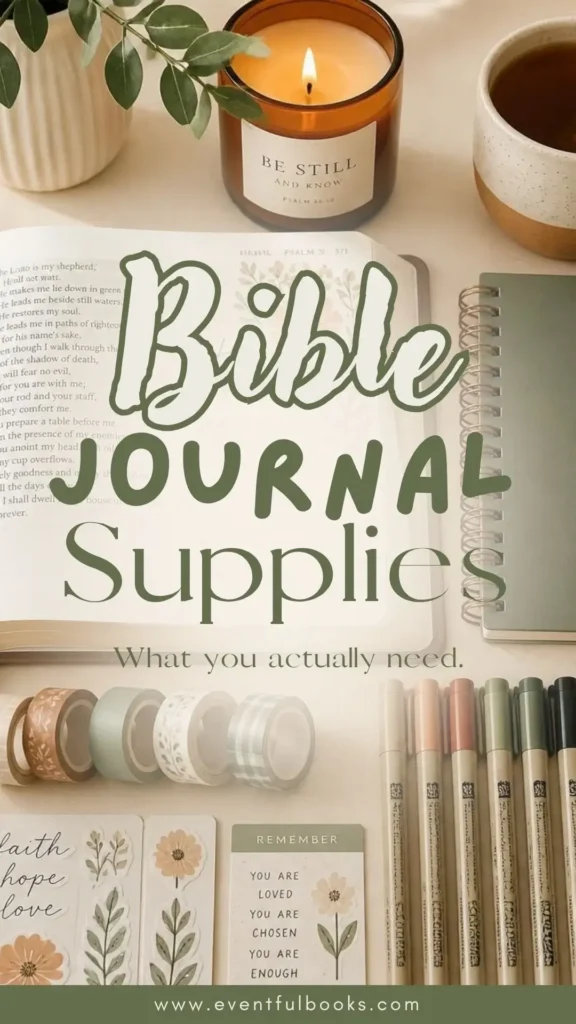
At its most basic, all you really need to do Bible journaling is something to read from and something to write with. You don’t need the perfect setup before you can start “properly”.
That said, half the fun of this practice is building out a little collection of bible journaling supplies that make you actually want to sit down and open your Bible — think of it as creating a small, personal ritual, not just checking a box.
A cozy corner, your favourite bible version, a colorful pen, a Christian candle lit nearby — it helps to make the habit something to look forward to rather than another task on your list.
There are two main things worth thinking through before you start. The first is what you’ll actually be writing in — whether that’s a Bible specifically designed with journaling in mind, or something else entirely, like a notebook or planner-style journal.
The second is what you’ll be writing with, since not every pen, marker, or highlighter plays nicely with thin Bible paper (a heartbreak every beginner learns the hard way at least once).
From there, it’s really about curating what feels like you — soft pastel highlighters, a set of fine-liner pens, maybe a few washi tapes or Bible stickers if you love a decorated page. None of it needs to be expensive or elaborate to start.
What Does a Journaling Bible Look Like?
At first glance, a journaling Bible looks a lot like any other Bible — same Scripture, same books, same familiar layout of chapters and verses. The difference is primarily in the margins and writing space.
Journaling Bibles are usually printed with wide, blank margins running alongside the text, about two inches of open space on each page.
Some include faint ruled lines to guide your handwriting; others leave the space completely blank for writing, drawing, or painting freely.
The paper is also typically a bit heavier than what you’d find in a standard Bible, since it needs to hold up to pens, markers, and sometimes watercolor without bleeding through to the other side.
If a wide margin Bible isn’t for you — maybe you don’t want to write in your actual Bible, a guided study-style workbook or you’d rather keep your notes separate — that’s completely fine.
Many people use a regular Bible alongside a separate notebook, interleaved journaling pages, or even a simple faith journal instead.
The blank space is helpful, but it’s not what makes the practice meaningful. What matters is the habit of engaging with the text, not which page it happens on.
What Are Bible Journaling Techniques (Pick What Fits You)
There’s no single “right” way to Bible journal — and honestly, most people find their own version somewhere between the approaches below rather than following just one.
Here are a few common ways to get started, so you can find what actually fits your personality and season of life.
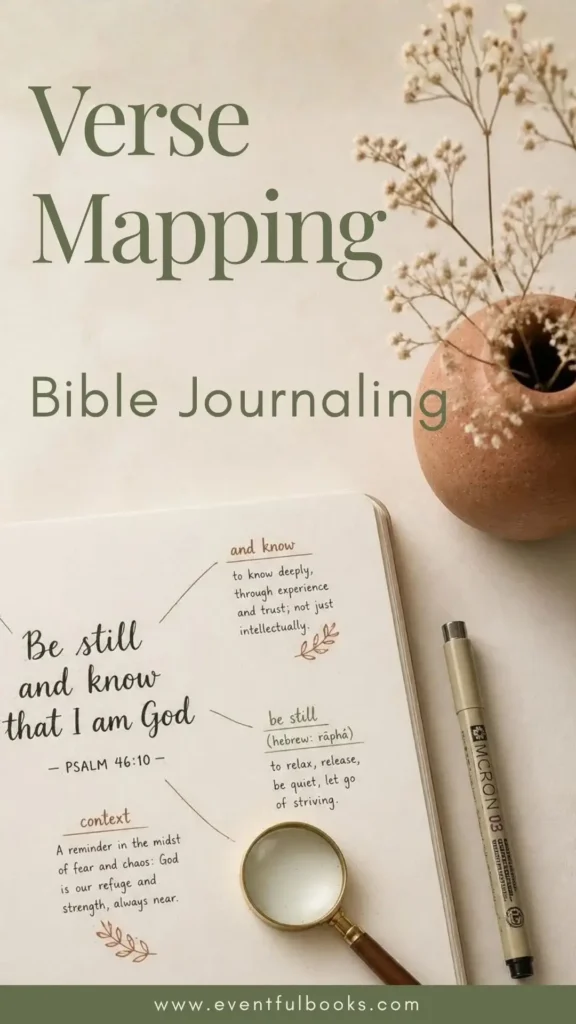
Verse mapping. Instead of journaling a whole passage, you take one verse and break it down in detail — looking closely at individual words, checking a few cross-references, or comparing how different translations word the same verse. It’s a slower, more analytical approach, great for anyone who wants to really sit with a single line of Scripture rather than cover a lot of ground.
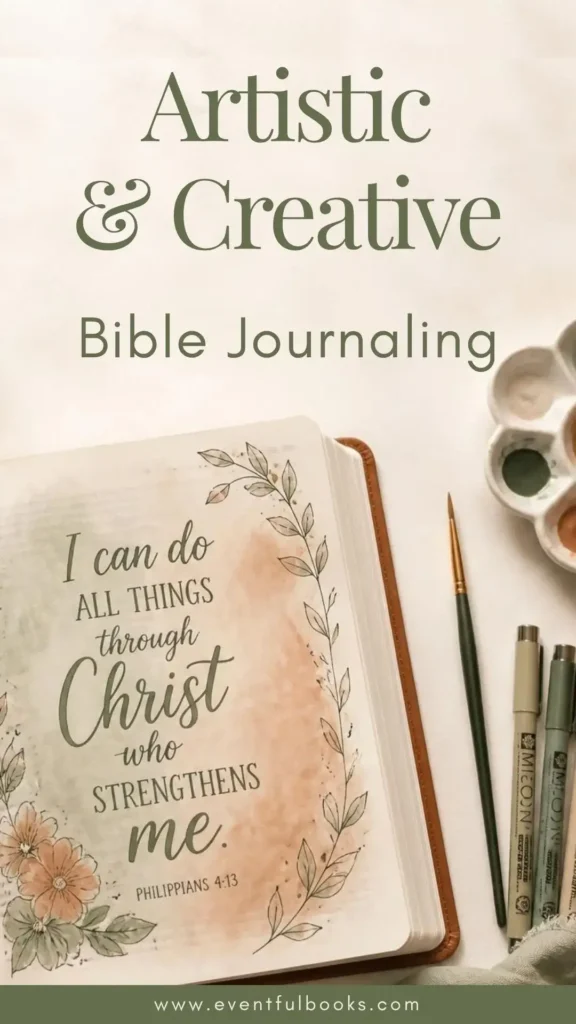
Creative/artistic journaling. This is the version most people picture when they think of Bible journaling — hand-lettering a verse, adding watercolor washes, doodling in the margins. It’s a wonderful outlet if you enjoy art, but it’s not a requirement for the practice to be meaningful.
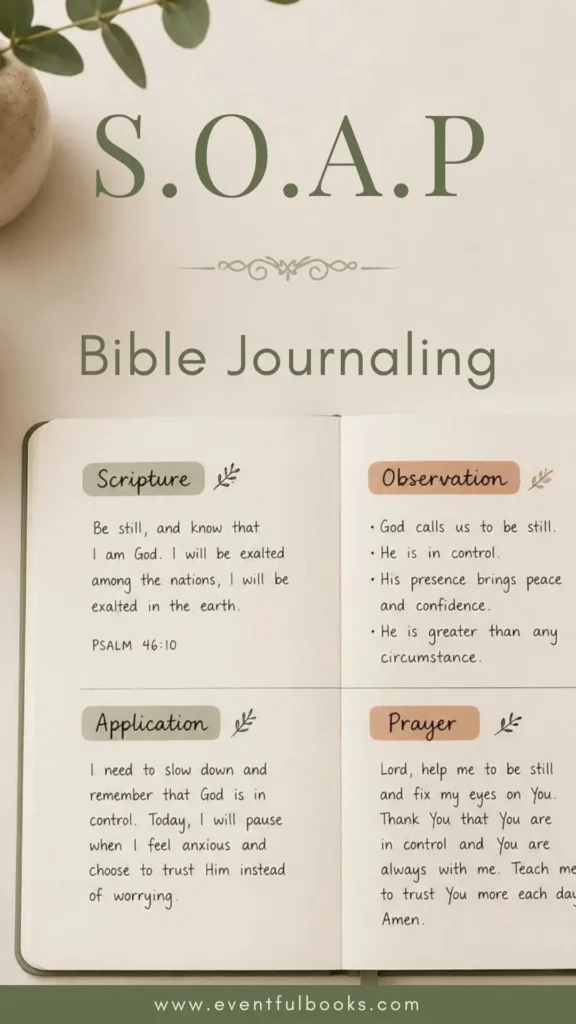
Structured methods, like SOAP. SOAP stands for Scripture, Observation, Application, Prayer — a simple four-part framework where you write out a verse, jot down what you notice about it, reflect on how it applies to your life, then close with a short prayer. It’s a great option if you like having a clear format to fill in rather than a blank page to figure out on your own.
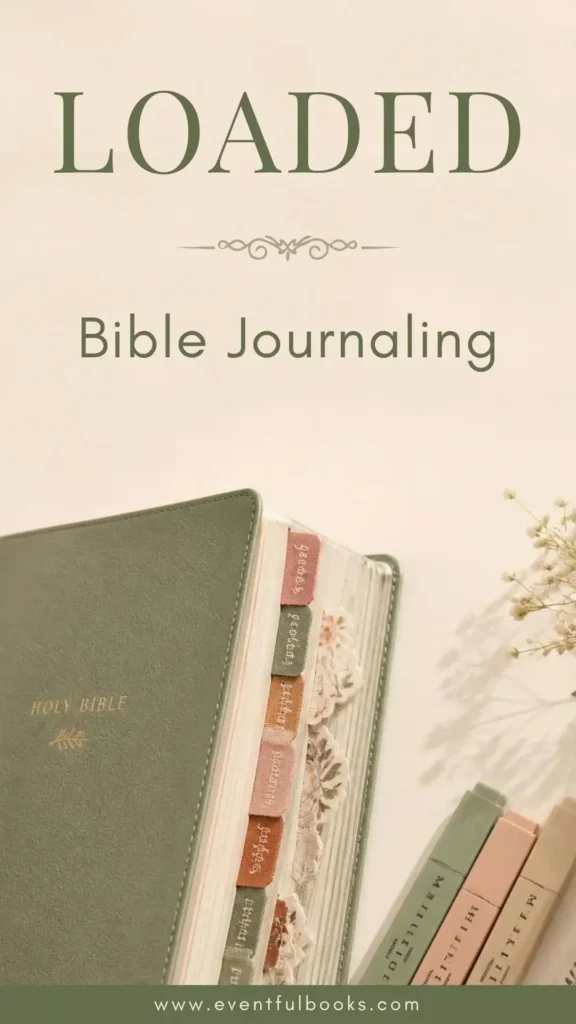
Loaded Bible journaling. This approach focuses less on writing long reflections and more on marking your actual Bible — tabbing books, flagging meaningful verses, highlighting, color-coding or adding a beautiful sticker as you go. Over time, your Bible itself becomes a personalized, visual record of everywhere God has met you in the text. If you want to learn more about creating a loaded Bible, check out our full guide here.
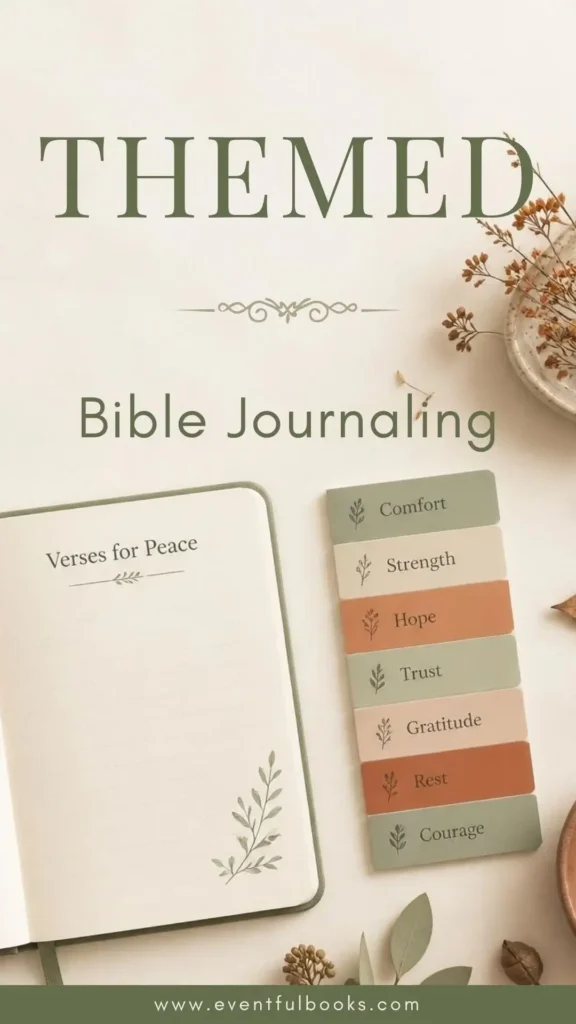
Themed or seasonal journaling. Rather than journaling whatever you happen to read that day, you choose a focus and stay with it for a while — working through a specific book of the Bible, or centering your entries around a particular need, like verses for anxiety, grief, or gratitude, during a season when that’s what you need most.
There are plenty of other approaches too — some people prefer prayer-focused journaling, where most of the entry becomes a written prayer, or digital journaling, typing entries into an app or document instead of writing by hand. Feel free to experiment until you find what feels natural.
What Are You Supposed to Write in a Bible Journal?
There’s no single “correct” thing to write in a Bible journal — which is often exactly what makes it intimidating for beginners. A blank margin can feel like more pressure than freedom if you don’t know where to start. So here are a few simple, low-pressure places to begin:
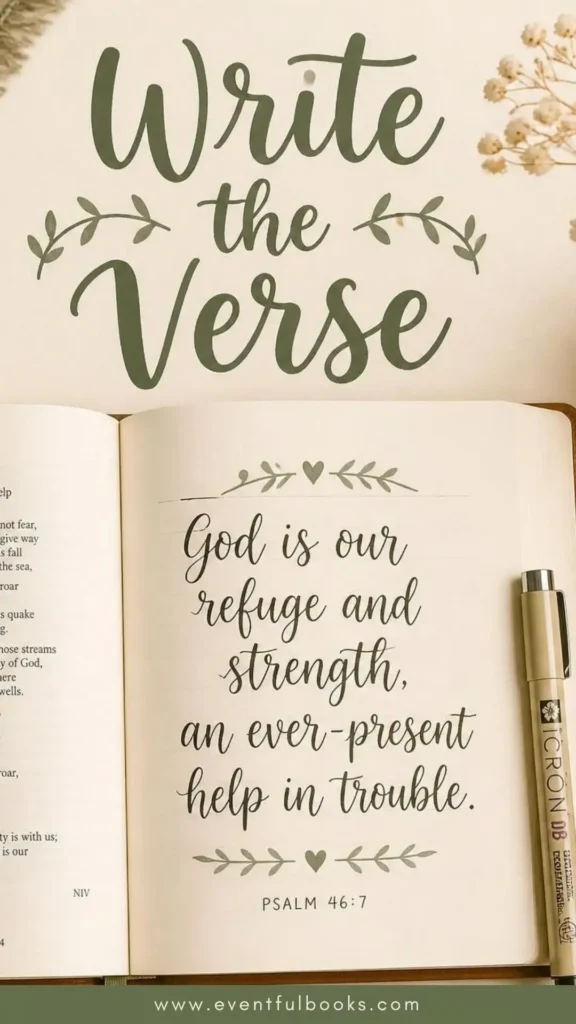
The verse itself. Sometimes the simplest entry is just copying out a verse that stood out to you, word for word. Writing it out in beautiful hand lettering — rather than just reading it — as a way of making it stick differently.
Check out our list of 18 Bible verses for encouragement or 10 verses that prove Jesus is King to get you started.
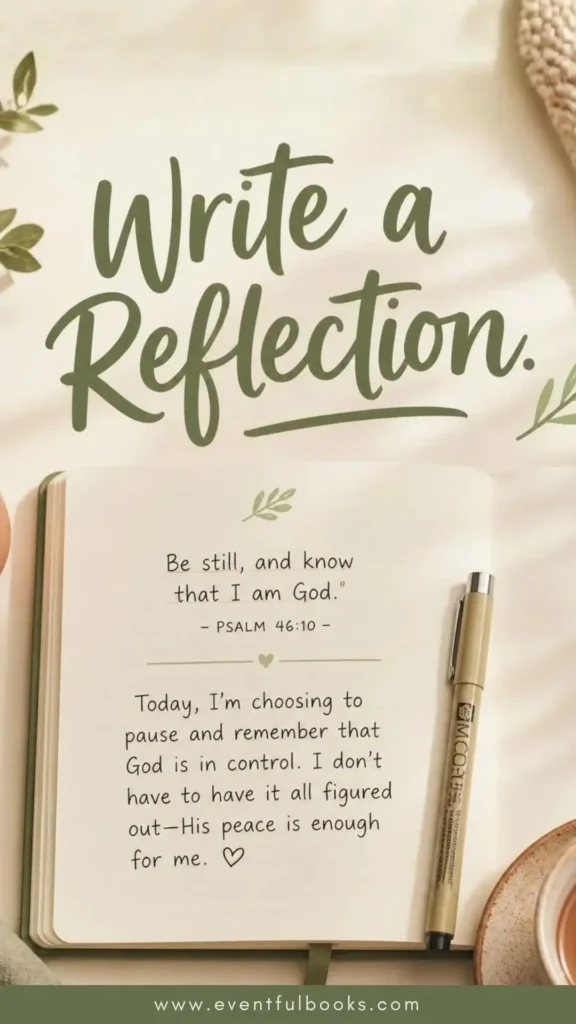
A written reflection. A sentence or two on why that verse caught your attention. What’s going on in your life right now that made it feel relevant? You don’t need to write a paragraph — even a single honest sentence counts.
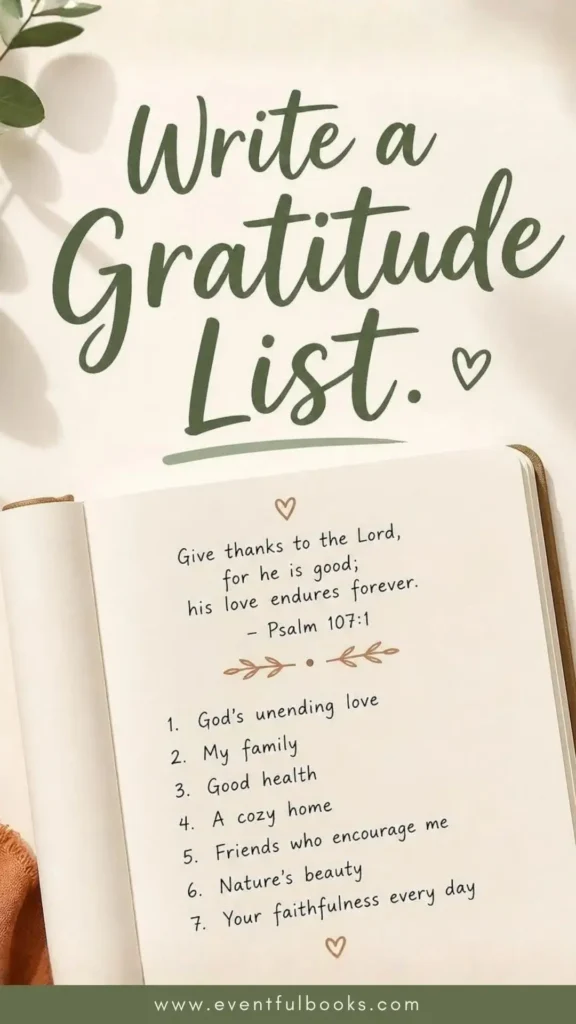
A gratitude list. Some verses naturally prompt thankfulness — writing down a few specific things you’re grateful for in that moment, inspired by the passage, rather than just reflecting on the verse itself.
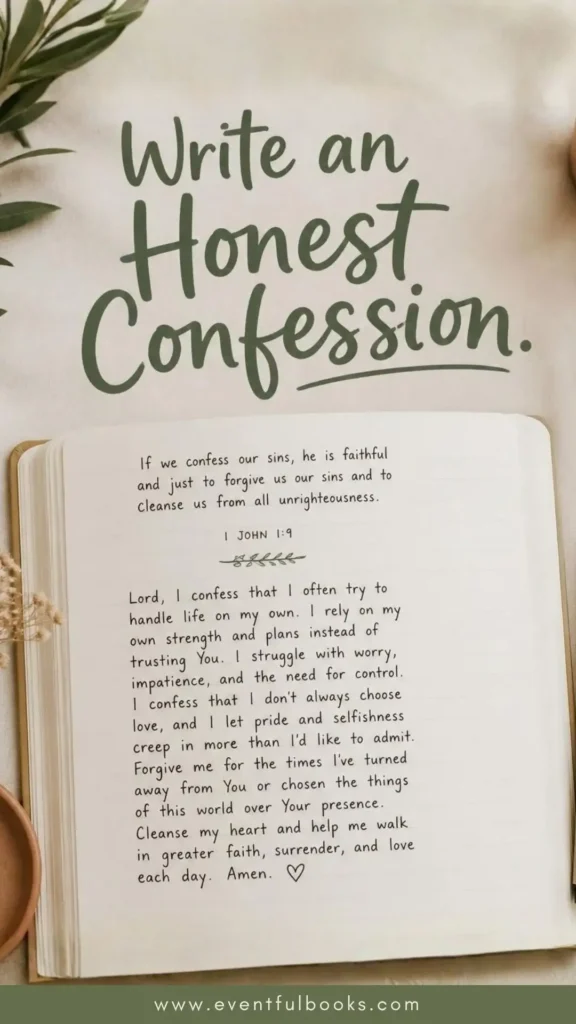
A confession. Not every entry has to be encouraging. Some verses will surface something you’re not proud of — a habit, an attitude, a way you’ve fallen short. Writing it down honestly, as a kind of confession, is its own valid form of engaging with the text.

A “what I’m learning” note. Slightly different from a reflection — this is more about a lesson or insight you’re taking away, something you want to actually apply or change going forward, not just how the verse made you feel. If you’re searching for more ways to learn the Bible beyond journaling alone, that’s worth exploring too.
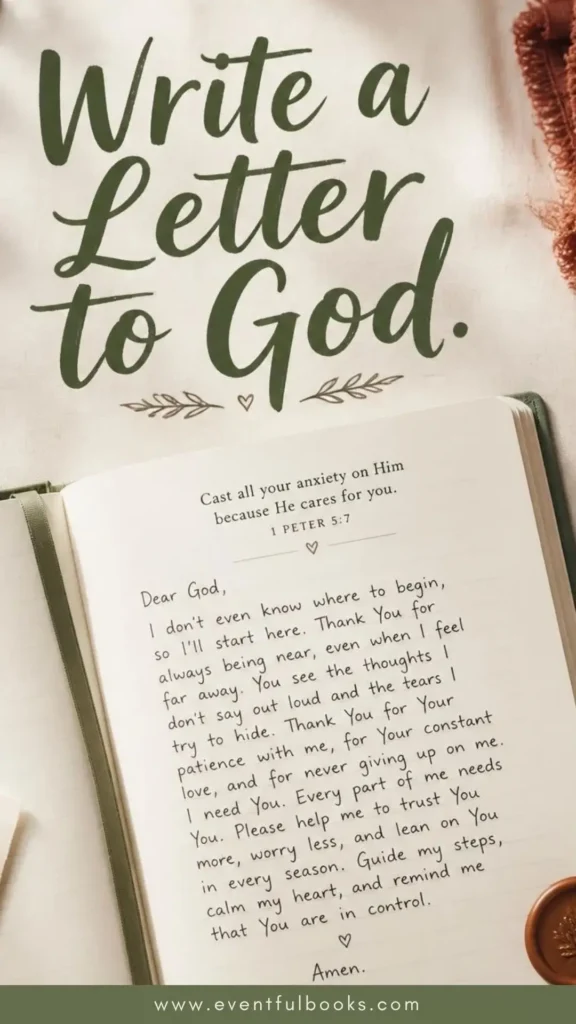
A letter to God. For verses that stir up something bigger than a single line can hold, some people write a short, informal letter — more conversational than a prayer, closer to just talking to God directly on the page.
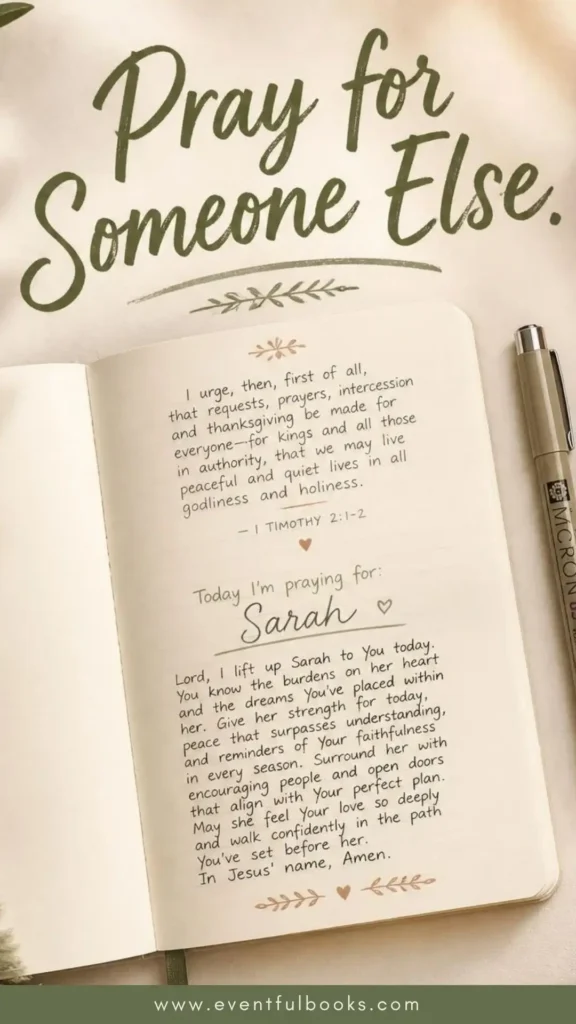
A prayer for someone you love. If a verse makes you think of a specific person — someone who needs the same comfort, courage, or peace you just read about — you can write their name down and turn the verse into a prayer on their behalf.
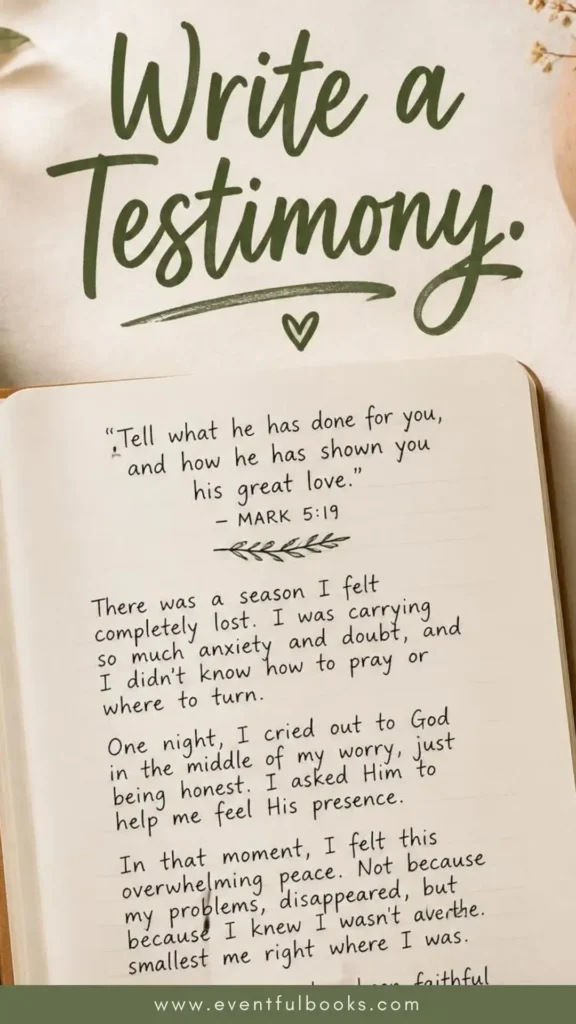
A testimony. If a verse reminds you of a time God already answered a prayer or came through for you, writing that story down turns the entry into a small, personal record of faithfulness you can look back on.
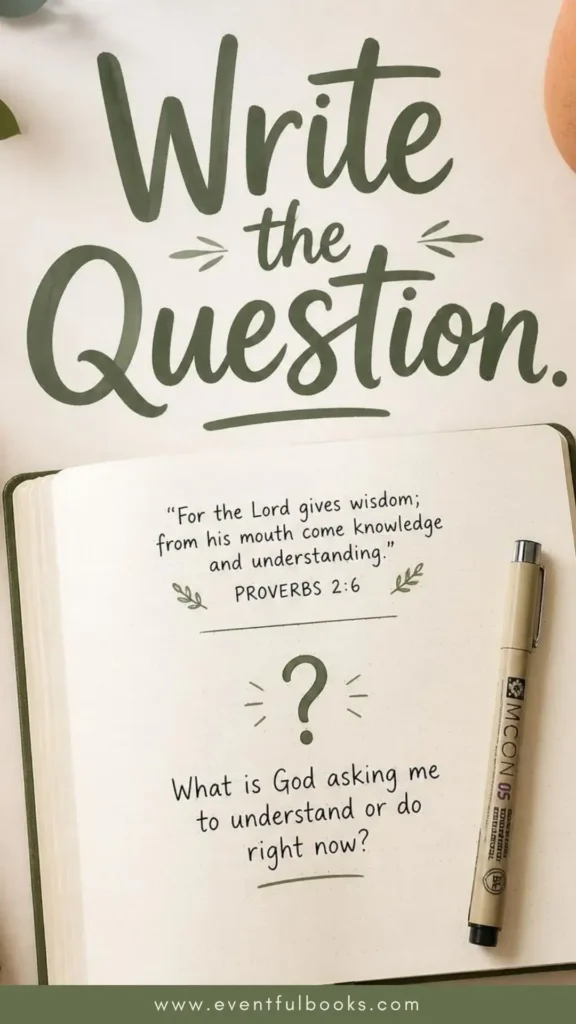
A question. Not every verse needs to be fully understood to be written down. If something confuses you, or you’re wrestling with what it means, write the question itself. You don’t have to have the answer yet.
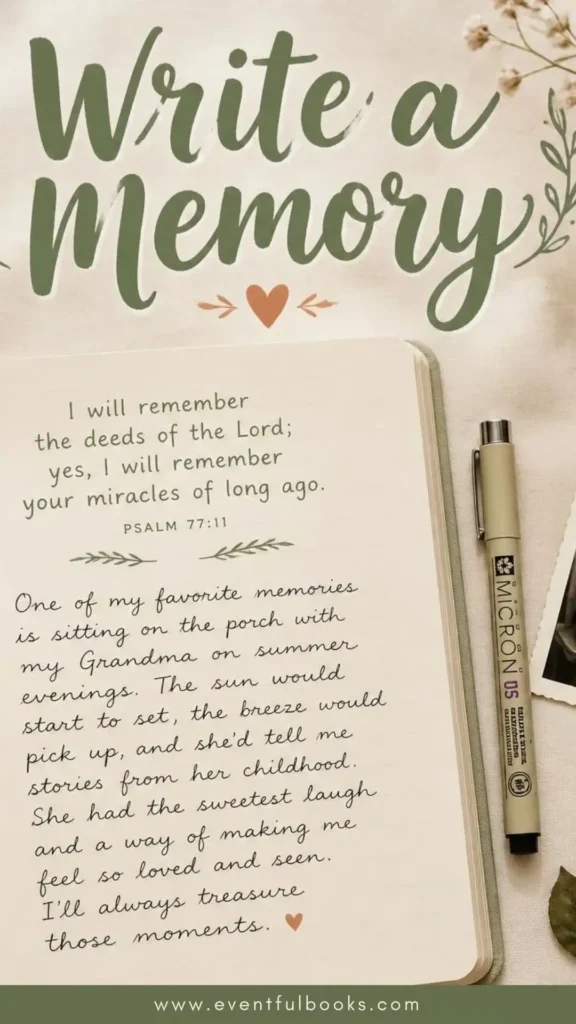
A memory. Some verses will remind you of a specific moment — a time God showed up for you, a season you got through, a person who’s no longer with you. Writing down that memory next to the verse ties Scripture to your own story, not just the Bible’s.
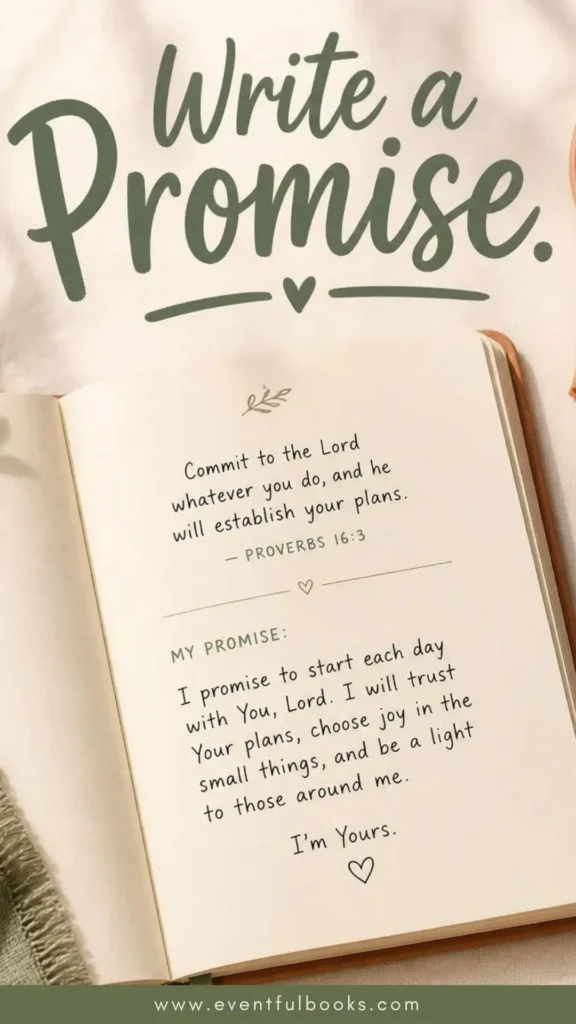
A promise to yourself, or to God. A verse might stir something in you that feels less like a reflection and more like a commitment — a small promise to trust more, worry less, or show up differently in some part of your life. Writing it down makes it something you can return to.
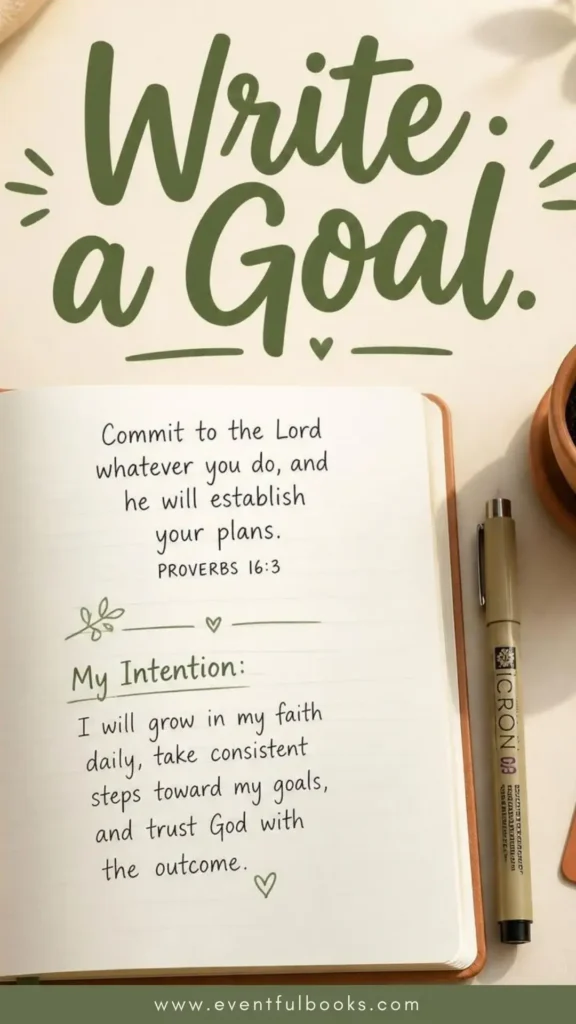
A goal or intention. Similar to a promise, but more forward-looking — a hope you’re carrying, or something you want to grow toward, inspired by what you just read.
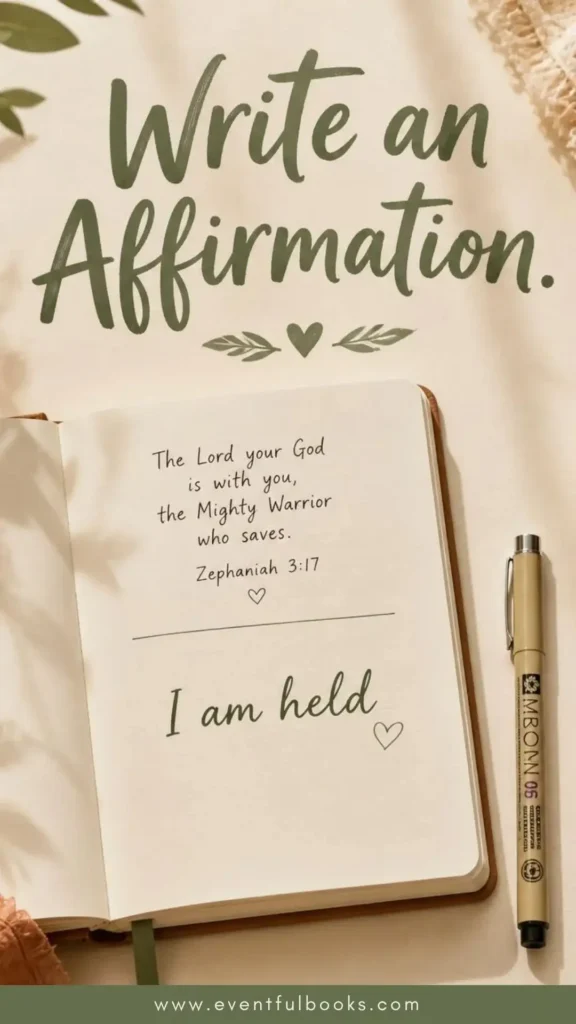
An affirmation. A short, personal truth drawn from the verse, written the way you’d want to remember it — something like “I am held” or “I don’t have to carry this alone.”
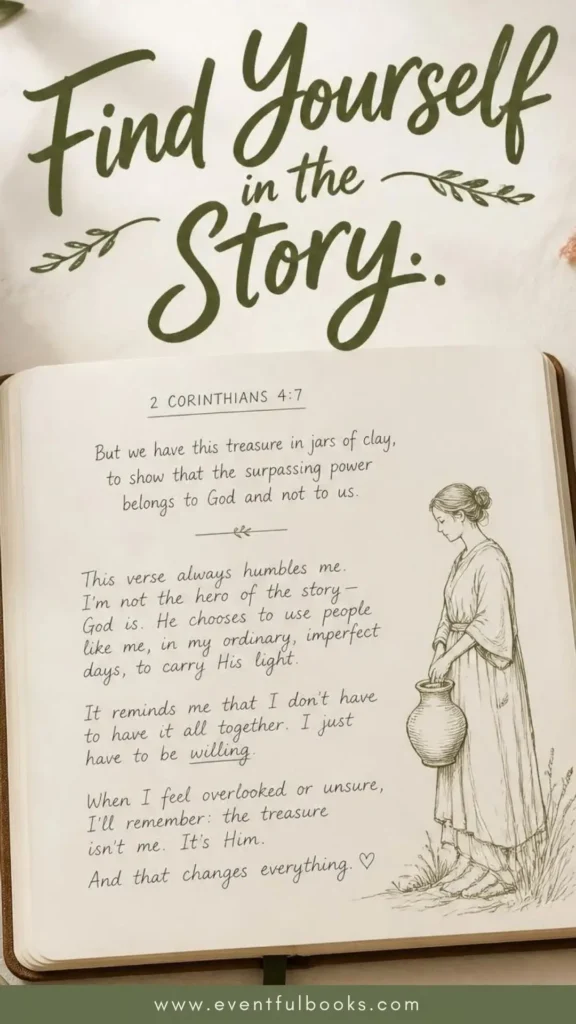
A connection to the story or a character. If the passage is part of a larger narrative, you might find yourself relating to someone in it — their fear, their faith, their mistake. Writing down that connection can make familiar stories feel new again.
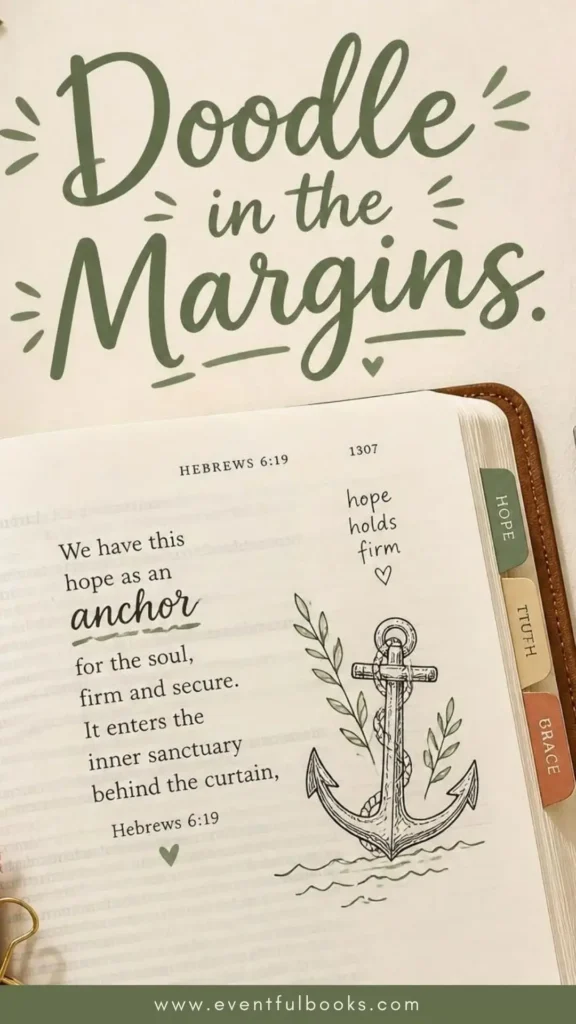
A small drawing or doodle. You don’t have to be artistic for this to count. Bible art journaling can include as little as a simple sketch of an object from the passage — a lamp, an anchor, a tree — as its own quiet way of sitting with the text. Of if you’re artistically gifted then you can be as elaborate and expressive as you wish.
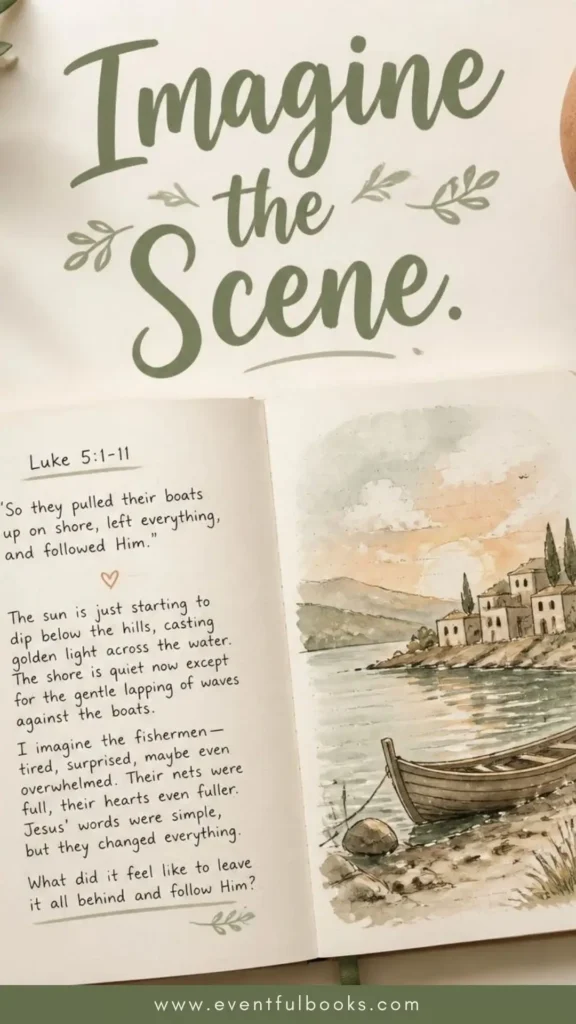
Your own imagination of the scene. Some people like to picture what a moment in Scripture might have actually looked, sounded, or felt like, and jot that down — a small act of stepping into the story rather than just reading about it.
A date. Small, but valuable — marking when you wrote an entry means you can look back later and see not just what you were reading, but where you were in life at the time.
None of these need to happen all at once, and you don’t need all of them in a single entry. Most people find their own rhythm over time — some days it’s just a verse and a date, other days it’s a longer reflection, a doodle, or a prayer. The goal isn’t to fill the page. It’s to actually mean what you write, even if it’s just one line.
Common Bible Journaling Mistakes To Avoid
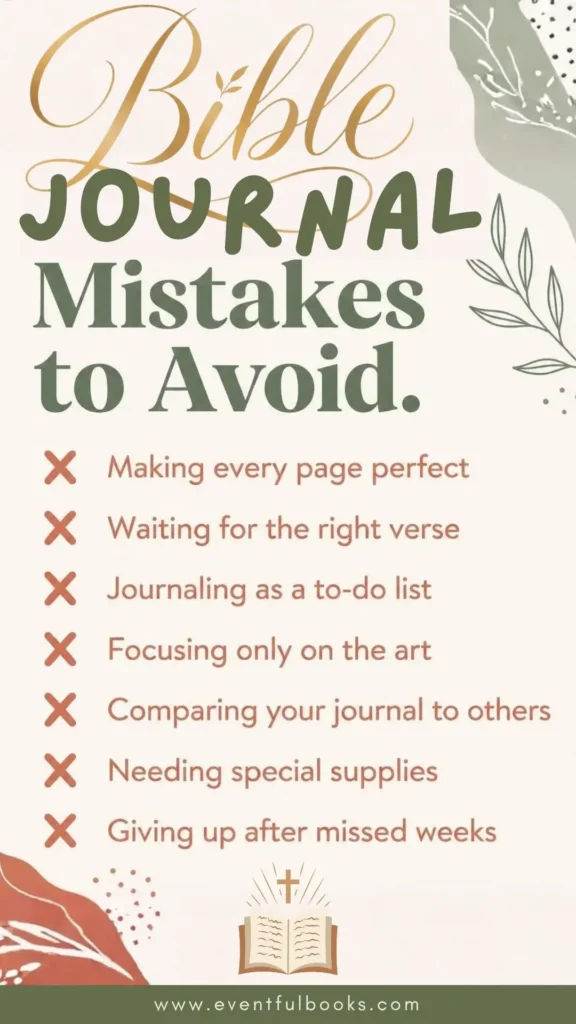
Like anything new, Bible journaling comes with a bit of a learning curve — and a few habits that are easy to fall into early on, even with the best intentions. Here are the most common ones, and simple ways to avoid them.
Trying to make every page “perfect.” It’s tempting to compare your first entries to the beautifully lettered, watercolor-filled pages you see online, and feel like your own attempt falls short. But those pages usually took years of practice, not a first try. Avoid this by reminding yourself the goal isn’t a finished piece of art — it’s an honest response to Scripture. A messy page with real reflection on it is worth more than a beautiful page with none.
Waiting for the “right” verse to start. Some beginners hold off journaling because they’re waiting to feel deeply moved by a passage before they write anything down. But inspiration doesn’t always come first — sometimes it comes from the act of writing. Avoid this by starting with whatever you’re reading today, even if it doesn’t feel especially profound yet.
Treating it like a to-do list. Journaling every single day, covering every verse, or hitting a certain number of entries a week can turn a meaningful practice into another task to check off. Avoid this by letting your rhythm be flexible — some weeks might mean daily entries, others just one or two, and that’s completely fine.
Focusing only on the art, not the reflection. It’s easy to get pulled into the creative side — doodles, lettering, colors — and lose the actual point of engaging with the text. Avoid this by writing something first, even a single sentence, before adding any decoration. The art can support the reflection, but it shouldn’t replace it.
Comparing your journal to someone else’s. Every Bible journal looks different, because every person brings something different to the page. Avoid this by remembering your journal isn’t meant to be shared or judged — it’s meant to be honest.
Feeling like you need special supplies to start. Beautiful pens, watercolors, and stickers are nice, but none of them are required. Avoid this by starting with whatever you already have — a regular pen and a notebook is more than enough to begin.
Giving up after a few inconsistent weeks. Life gets busy, and journaling often falls away during hard or hectic seasons — which can feel discouraging, like you’ve “failed” at it. Avoid this by remembering there’s no streak to protect. You can pick your journal back up any time, without needing to start over or catch up on what you missed.
What are Bible Journaling Tips for Beginners?
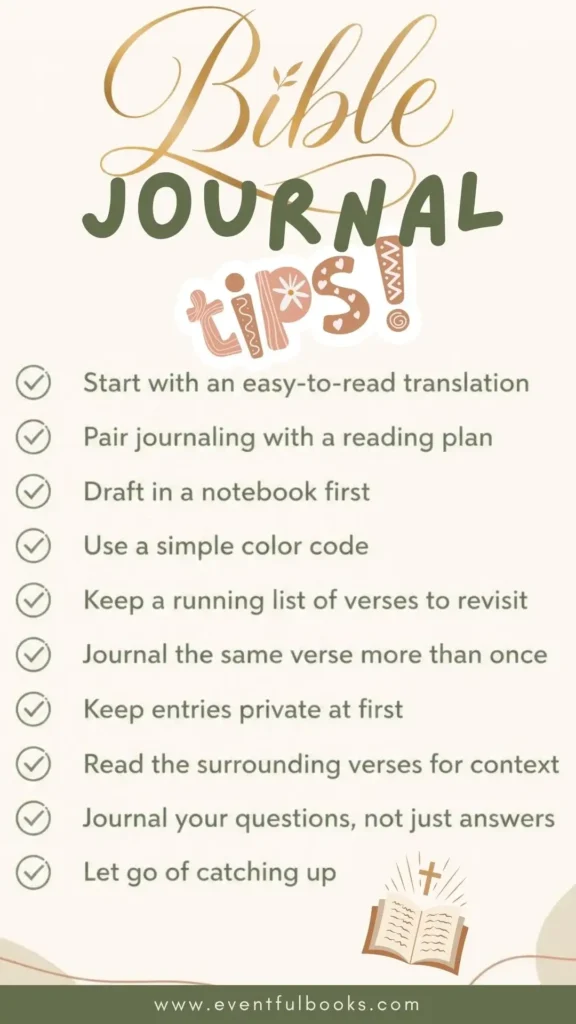
1. Start with a bible translation that’s easy to read. A more modern, readable translation — like the NIV or NLT — makes it much easier to connect with what you’re reading, which makes journaling feel natural instead of like a decoding exercise.
2. Pair your journaling with a reading plan. Journaling is even easier when you’re not also deciding what to read that day. Using a structured reading plan — like our free chapter tracker — takes that decision off your plate, so you can spend your time actually reflecting instead of flipping around looking for a starting point.
3. Draft in a notebook first, then refine it into your Bible. If you’re using a wide-margin Bible, it can help to work out your thoughts in a separate notebook first — where there’s more room to think freely — before writing a cleaner, shorter version into the margin. That way your journaling Bible stays a little tidier, and you’re not committing to permanent ink before you’ve figured out what you actually want to say.
4. Use a simple color code, even a basic one. You don’t need an elaborate system — even just one color for promises, one for prayers, and one for verses that challenge you can make your Bible easier to navigate later.
5. Keep a running list of verses you want to revisit. Not every verse needs a full entry in the moment. Keep a short list on a sticky note or the inside cover, then come back to the ones that still feel important a few days later.
6. Journal the same verse more than once, on different days. A verse can hit differently depending on what’s going on in your life. Revisiting an old favorite months later often reveals something new you didn’t notice the first time.
7. Keep your entries private, at least at first. Knowing an entry might be seen by someone else can quietly change how honestly you write. Give yourself permission to keep your first journal just for you.
8. Read the surrounding verses, not just the one that stands out. A single verse can mean something different once you see it in context. Before journaling, take a moment to read a few verses before and after it.
9. Journal your questions, not just your answers. If a passage leaves you confused or unsettled, write that down honestly. A recorded question is often the start of a much deeper understanding later on.
10. Let go of catching up. If you miss a few days, weeks, or even months, there’s no need to fill in what you missed. Just open to today’s reading and keep going from there.
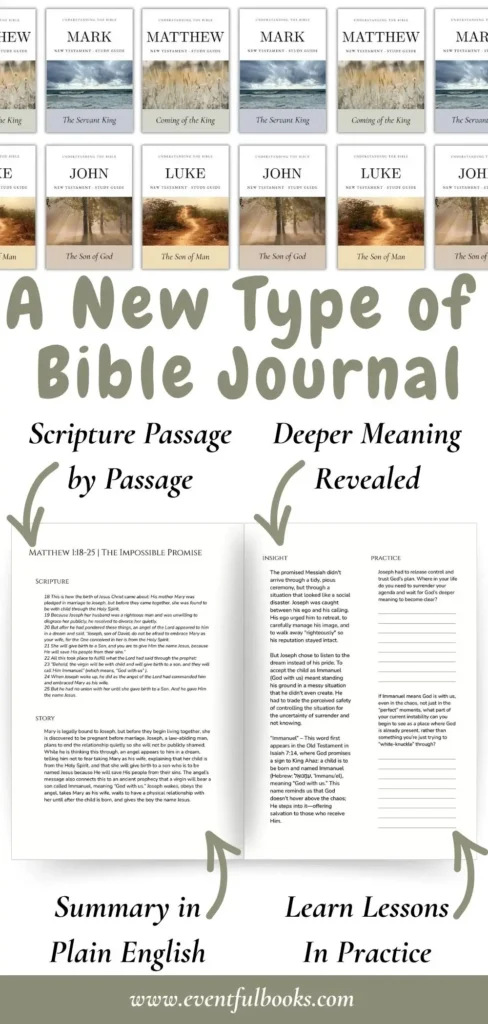
No — any Bible (or even a separate notebook) works just fine. A journaling Bible with wide margins can make the process a little easier, but it’s a nice-to-have, not a requirement. If you’d rather have some structure to guide your reflections, our book-by-book study guide series pairs each passage with a plain-English version, a short insight section, and two practical questions to help you apply what you’re reading to your own life.
A journaling Bible has wide, blank margins built into the page design specifically for writing, drawing, or note-taking — a regular Bible doesn’t. The Scripture text itself is identical; it’s purely a difference in page layout and paper weight.
The best journaling Bible is one in a translation you actually understand and enjoy reading — the margin width matters far less than that. From there, look for wide margins, single-column layout, and slightly heavier paper that can handle pens or light watercolor without bleeding through.
Yes, if you know you’ll use the extra space — but they’re not essential to start. Many people begin with a regular Bible and a separate notebook, then decide later whether a dedicated journaling Bible is worth the investment.
Yes — writing to God is a genuine, meaningful form of prayer for many people. Putting your thoughts into words on a page can make it easier to be honest, especially when your feelings are hard to say out loud.
It can be, though it doesn’t have to replace spoken or silent prayer entirely. Many people find journaling is simply prayer in written form — more reflective and less rushed — and use both together rather than choosing one over the other.
Scripture doesn’t mention “journaling” directly, since it’s a modern term, but it consistently affirms the value of remembering, reflecting on, and recording what God has done — practices journaling naturally supports. Verses like Habakkuk 2:2 (“write the vision, make it plain”) and Deuteronomy 6:6–9 point to writing and remembering as meaningful spiritual habits, even if the specific format of a modern Bible journal isn’t something Scripture describes.