Books Of The Bible – Every Book of the Bible Explained (Yes, All 66 of Them!)
If you’ve ever tried to read the Bible and given up somewhere around the third chapter of Leviticus — you are not alone.
The Bible is 66 books, written by dozens of different authors, across thousands of years, in three different languages.
It has poetry and law and history and prophecy and letters and apocalyptic visions. It can feel less like a book and more like a library.
But here’s the thing: once you know what you’re looking at, it all starts to click.
This guide walks you through every single book of the Bible — all 66 of them — in plain, simple language.
Not a theology lecture. Not a seminary syllabus. Just a friendly intro to each book so you know what it is, what it’s about, and why people have been reading it for thousands of years.
Whether you grew up in church and want to finally fill in the gaps, or you’re completely new to the Bible and just curious — this is for you.
We’ll go in order, starting with the Old Testament (39 books) and moving through to the New Testament (27 books), broken into sections so it never feels overwhelming.
You don’t have to read it all at once. Bookmark it, come back to it, use it as a reference. Think of it as your Bible cheat sheet — the one you actually wish someone had given you sooner. Click the drop down boxes below to reveal all the books belonging to each Testament.
The New Testament
The New Testament
The New Testament is where everything the Old Testament was pointing to finally arrives. It’s 27 books covering the life of Jesus, the birth of the early church, letters written to real communities figuring out what it meant to follow him, and a sweeping vision of how it all ends. It’s shorter than the Old Testament, but just as rich.
The Gospels
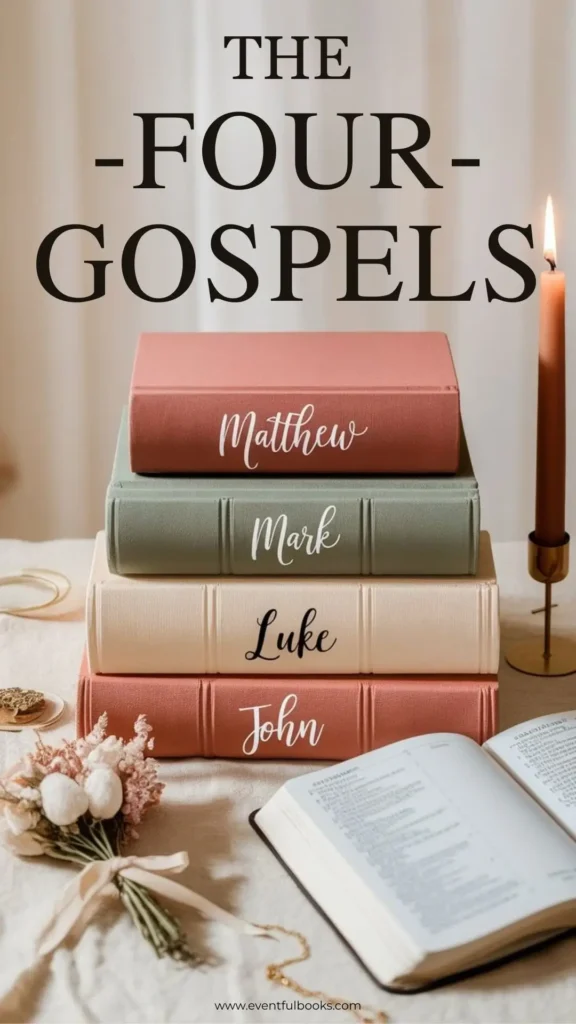
The word “gospel” means good news — and these four books are exactly that. Each one tells the story of Jesus’ life, death, and resurrection from a different angle and for a different audience. They’re not four copies of the same story; they’re four portraits of the same person, each one revealing something the others emphasize differently.
40. Matthew
Written primarily for a Jewish audience, Matthew is constantly connecting Jesus back to the Old Testament — showing how he fulfills centuries of prophecy. It includes the Sermon on the Mount, the Lord’s Prayer, and the Great Commission. If you want to understand how Jesus fits into the bigger story of Scripture, start here.
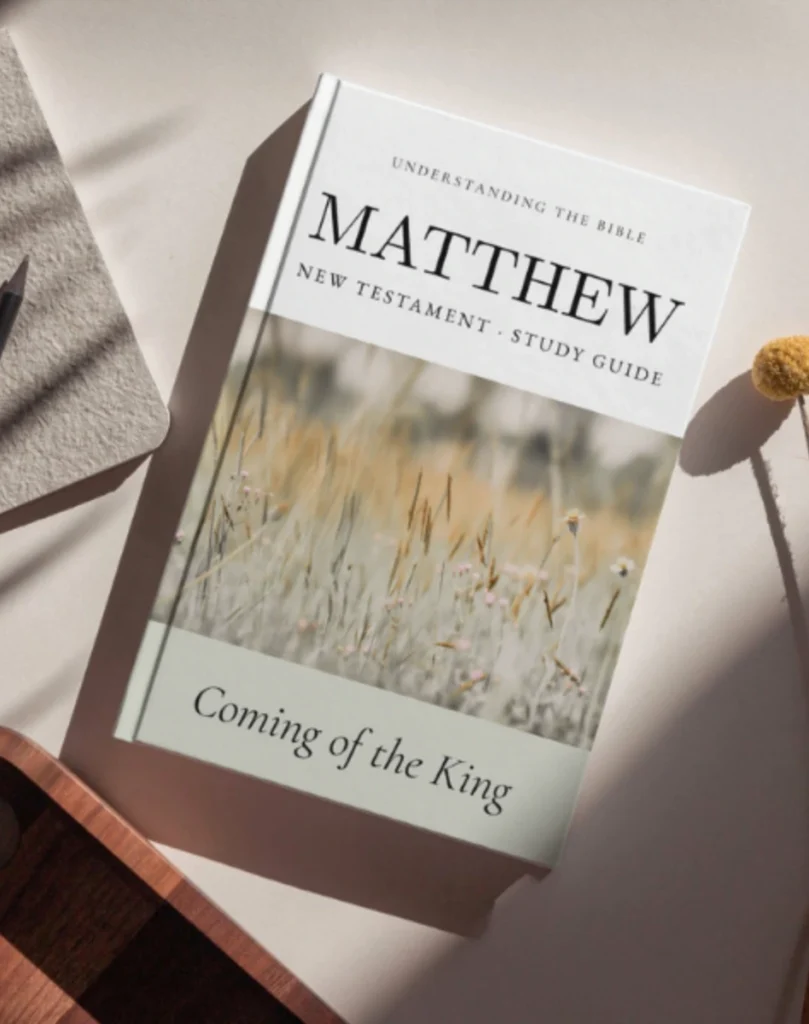
Want to go deeper into Matthew? The Understanding The Bible: Matthew study guide walks you through the whole book in daily passages — the scripture, the story in plain English, deeper insights, and questions to bring it into your real life. Perfect for anyone who wants to finally understand how Jesus fits into the bigger picture.
41. Mark
The shortest and fastest-moving of the four gospels. Mark wastes no time — the word “immediately” shows up constantly. It reads almost like a thriller, rushing from miracle to miracle. It’s thought to be the earliest gospel written, and it’s a great entry point if you’ve never read any of the gospels before.
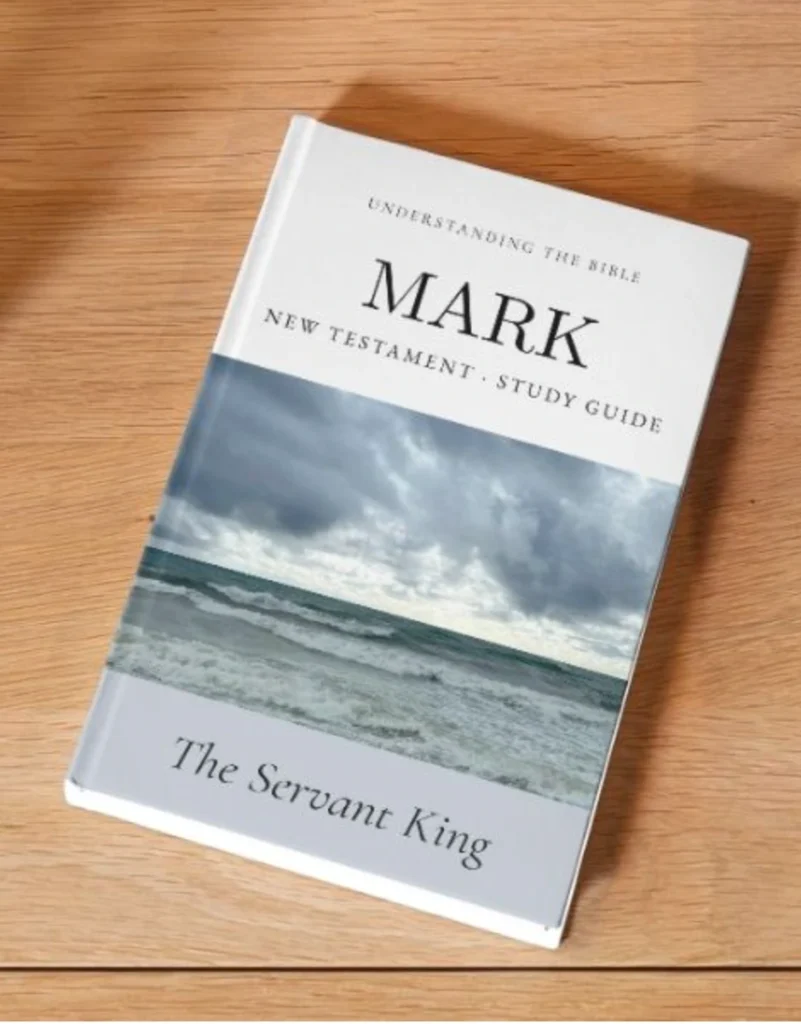
Mark moves fast — and our Understanding The Bible: Mark guide keeps up. Each day covers a passage with the story broken down simply, deeper insights to unpack what’s really going on, and reflection questions to make it personal. Ideal for a first-time Bible reader who wants to start somewhere and actually finish.
42. Luke
Luke was a doctor, and it shows — his gospel is the most detailed and carefully researched. He’s also the one who gives us the most stories about women, the poor, and outsiders being welcomed in. The parables of the Prodigal Son and the Good Samaritan are both found here. Luke writes with warmth and precision.
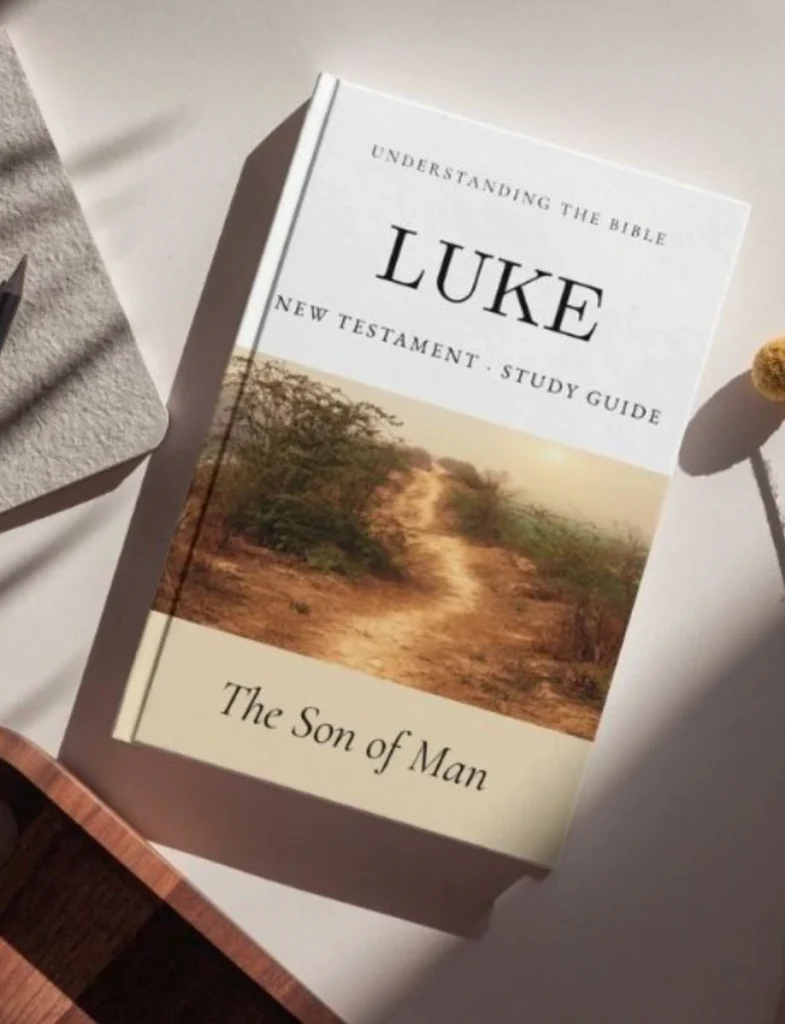
Luke is the most detailed of the four gospels — and it deserves a slow, intentional read. The Understanding The Bible: Luke study guide takes you through it day by day, with plain-English storytelling, rich insights, and space to write and make it your own. The Sabbath reflection spread at the end of each week gives you room to let it settle.
43. John
John is different from the other three in the best way. It’s slower, deeper, and more theological — opening with the stunning declaration that Jesus is the Word of God who became flesh. John includes long conversations Jesus has with individuals (Nicodemus, the woman at the well) and gives us “I am” statements like “I am the bread of life” and “I am the way, the truth, and the life.”
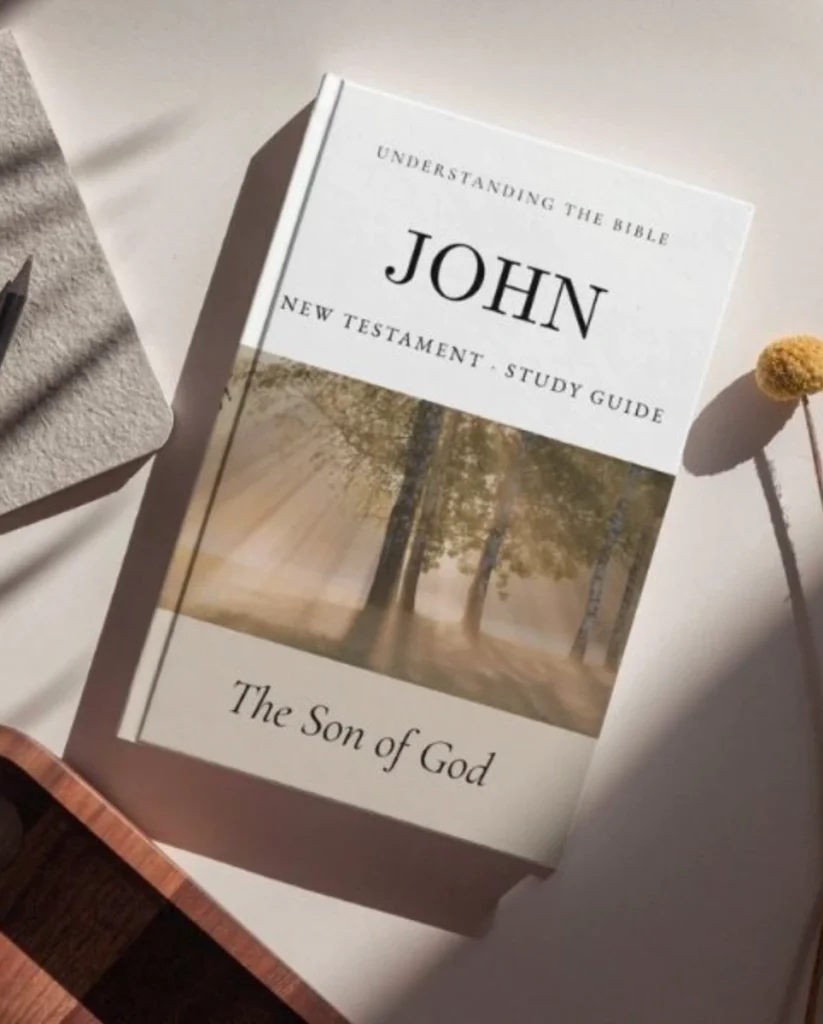
John is the gospel you return to again and again — and the Understanding The Bible: John study guide gives you a framework to go deep. Daily passages with plain-English breakdowns, deeper theological insights, personal reflection questions, and a weekly Sabbath spread to carry forward what stood out. Whether it’s your first time or your tenth, you’ll find something new.
Church History
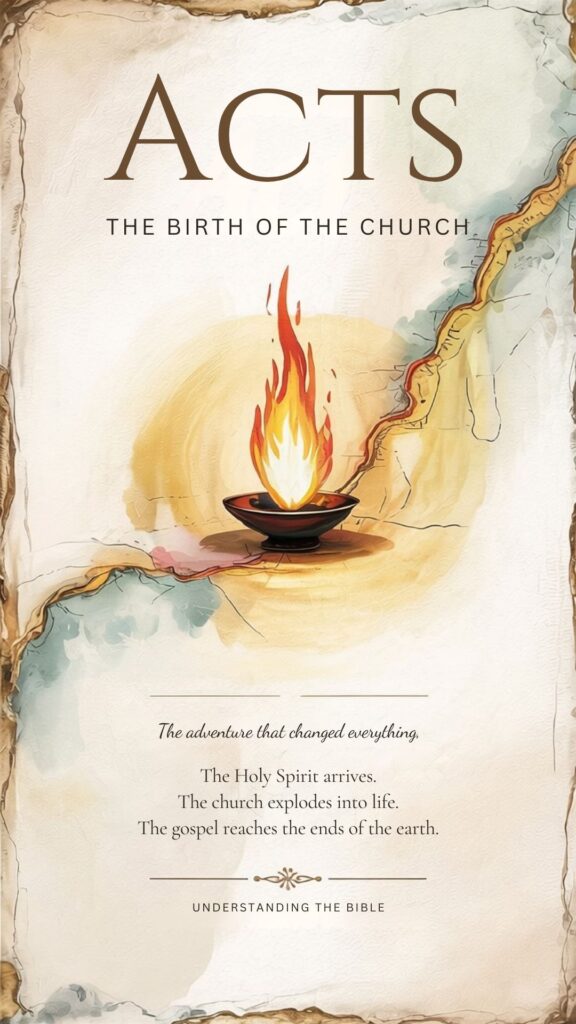
44. Acts
Written by Luke as a sequel to his gospel, Acts tells the story of what happened after Jesus ascended to heaven. The Holy Spirit arrives at Pentecost, the church explodes into existence, and the message of Jesus starts spreading from Jerusalem to the ends of the earth — largely through the missionary journeys of the apostle Paul. It reads like an adventure story, because it basically is one.
Paul’s Letters
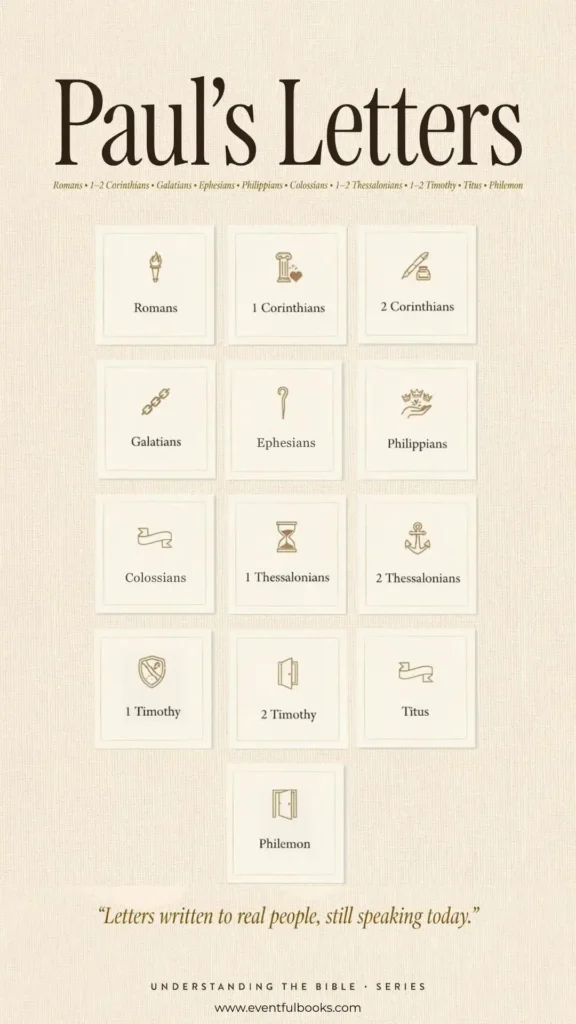
After his dramatic conversion on the road to Damascus, Paul became the most prolific writer in the New Testament. He planted churches all over the Roman world and then wrote letters back to them — addressing their specific questions, struggles, and conflicts. These letters are some of the most theologically rich writing in all of Scripture.
45. Romans
Paul’s most systematic and comprehensive letter — essentially a full explanation of the gospel from start to finish. It covers sin, salvation, grace, faith, and what it looks like to live in light of all of it. Romans is dense but rewarding, and it changed the course of history more than once (it’s the book that transformed both Augustine and Martin Luther).
46. 1 Corinthians
A letter to a church that was a mess — divided, arrogant, and confused about everything from marriage to spiritual gifts to whether it was okay to eat food sacrificed to idols. Paul addresses it all with patience and clarity. Chapter 13, the famous “love chapter,” lives here.
47. 2 Corinthians
More personal than his first letter, 2 Corinthians shows a vulnerable side of Paul — defending his ministry, processing his own suffering, and pouring out his heart to a community he clearly loves deeply. It contains his famous line about strength being made perfect in weakness.
48. Galatians
Short, sharp, and urgent. Paul is furious that the Galatian churches have been convinced they need to follow Jewish law on top of faith in Jesus. His argument — that salvation is by grace through faith alone, not by works — is one of the foundational pillars of Christian theology.
49. Ephesians
A letter written from prison that doesn’t read like it. Ephesians soars. It covers the mystery of God’s plan for the universe, the unity of the church, and what it looks like to live out your identity in Christ in everyday life. The “armor of God” passage is in chapter 6.
50. Philippians
Paul’s most joyful letter — also written from prison, which makes it even more remarkable. It’s full of warmth and encouragement for a church he genuinely loves. “I can do all things through Christ who strengthens me” and “whatever is true, whatever is noble… think about such things” both come from Philippians.
51. Colossians
Written to correct a creeping false teaching that was adding extra requirements to the gospel, Colossians is a powerful declaration of who Jesus is — above everything, holding everything together, the fullness of God in human form. It’s one of the highest views of Christ in the entire New Testament.
52. 1 Thessalonians
One of Paul’s earliest letters, written to a young church he had to leave too soon. He’s checking in, encouraging them through persecution, and answering their questions about what happens to believers who die before Jesus returns. Tender and pastoral in tone.
53. 2 Thessalonians
A follow-up to his first letter, addressing more confusion about the end times. Some people had gotten so convinced Jesus was returning immediately that they’d stopped working. Paul tells them firmly: stay grounded, keep living faithfully, don’t panic.
54. 1 Timothy
A personal letter to Timothy, a young leader Paul mentored. It’s full of practical guidance on how to lead a church well — handling false teaching, choosing good leaders, caring for different groups within the community. Paul writes to Timothy like a father to a son.
55. 2 Timothy
Paul’s final letter, written just before his execution. It’s deeply personal and emotionally moving — passing the torch to the next generation, urging Timothy to stay faithful no matter what, and reflecting on a life well lived. “I have fought the good fight, I have finished the race” is in chapter 4.
56. Titus
Another letter to a church leader, this time on the island of Crete. Paul gives Titus practical instructions for establishing healthy church leadership and dealing with false teaching. Short, clear, and full of reminders that good theology should always produce good living.
57. Philemon
The shortest of Paul’s letters — just one chapter. Paul writes to a slave owner named Philemon, asking him to welcome back his runaway slave Onesimus as a brother rather than punishing him. It’s a quiet, personal letter with enormous implications about dignity, forgiveness, and how the gospel changes relationships.
General Letters
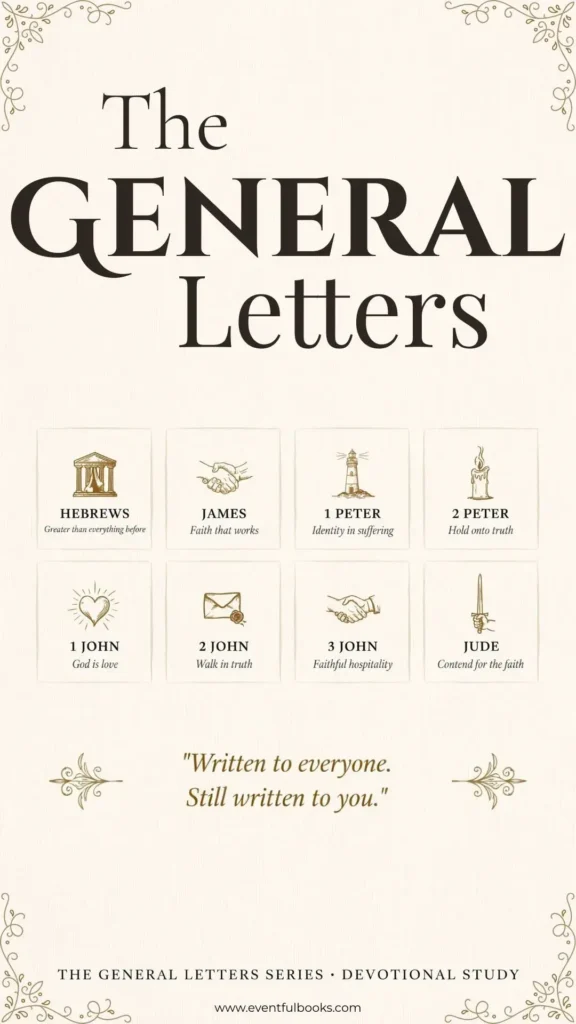
These letters weren’t written to one specific church but to broader audiences — Jewish Christians scattered across the Roman world, or the church at large. They each have a distinct voice and address some of the most pressing questions of the early Christian life.
58. Hebrews
Nobody knows for certain who wrote Hebrews, but whoever it was had a brilliant mind and a deep knowledge of the Old Testament. The whole letter is an argument that Jesus is greater than — and the fulfillment of — everything in the Jewish faith: the priesthood, the sacrificial system, the covenant. The famous “Hall of Faith” chapter listing Old Testament heroes is in chapter 11.
59. James
Practical, direct, and a little blunt — James reads like wisdom literature (think Proverbs) applied to the Christian life. He’s particularly passionate about the connection between faith and action: “faith without works is dead.” He also has a lot to say about the tongue, favoritism, and how to treat the poor.
60. 1 Peter
Written to Christians facing real persecution, 1 Peter is a letter of encouragement and grounding. Peter reminds them of their identity — chosen, royal, holy — and calls them to live with hope and dignity even in suffering. It’s one of the most pastoral and beautiful letters in the New Testament.
61. 2 Peter
Peter’s second letter warns against false teachers who have crept into the community and are distorting the gospel. He urges his readers to grow in their faith, hold onto the truth, and keep their eyes on the promise of Christ’s return. Tradition holds this was written shortly before his death.
62. 1 John
Not a letter so much as a theological meditation — on love, light, and what it really means to know God. John writes with simple language and profound depth, returning again and again to the theme that God is love and that love must be the defining mark of anyone who claims to follow him.
63. 2 John
Just 13 verses, written to “the chosen lady” (likely a church). John urges them to hold onto the truth of the gospel and be discerning about who they welcome — not every teacher claiming to speak for God actually is.
64. 3 John
Another short, personal letter — this time to a man named Gaius, commending him for his hospitality and faithfulness, and warning about a controlling leader in the church named Diotrephes who was causing division.
65. Jude
A short, punchy letter from Jude (likely the brother of Jesus) urging believers to “contend earnestly for the faith.” False teachers have slipped in and are distorting grace into a license to do whatever they want. Jude is urgent, passionate, and ends with one of the most beautiful benedictions in the New Testament.
Prophecy
66. Revelation
The last book of the Bible — and the most debated. Written by the apostle John while exiled on the island of Patmos, Revelation is a vision of cosmic proportions: the risen Jesus, seven churches, seals and trumpets and bowls, the fall of empires, and the final restoration of all things. It’s been interpreted in many different ways, but at its heart it’s a letter of hope to people under severe pressure — reminding them that God wins, evil doesn’t have the last word, and everything broken will one day be made new.
The Old Testament
The Old Testament
The Old Testament can feel like a lot — and honestly, it is a lot. But once you understand how it’s organized, the whole thing starts to make sense. Here’s every book, grouped by type, with a short intro so you know exactly what you’re walking into.
The Law (Torah)
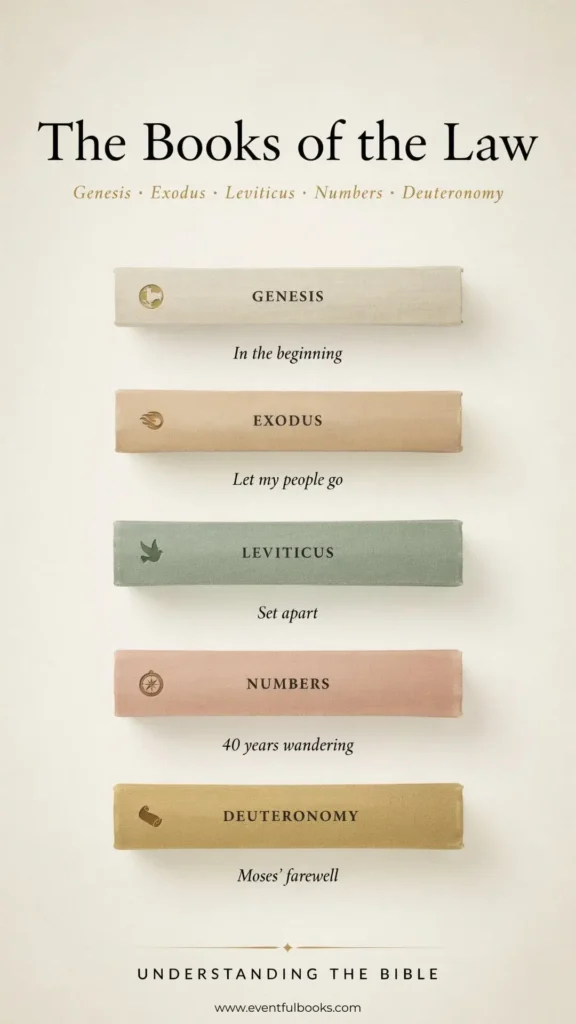
These five books are the foundation of everything. Written by Moses, they tell the story of how the world began, how humanity fell, how God called a people to himself, and the laws he gave them to live by. If you’ve heard of the Ten Commandments or the story of Noah — it’s all in here.
1. Genesis
The very first book of the Bible — and arguably the most famous. Genesis covers the creation of the world, the Garden of Eden, Noah’s ark, and the stories of the patriarchs: Abraham, Isaac, Jacob, and Joseph. It literally means “beginning,” and that’s exactly what it is.
2. Exodus
This is the story of Moses leading the Israelites out of slavery in Egypt — parting the Red Sea, the Ten Plagues, the Ten Commandments on Mount Sinai. Exodus is where God reveals his name and his character in a big, unmistakable way.
3. Leviticus
Okay, real talk — Leviticus is the one most people get stuck on. It’s a detailed book of laws given to the priests (the Levites), covering worship, sacrifice, and how to live as a holy people. It’s dense, but it shows how seriously God took the idea of his people being set apart.
4. Numbers
Named for the census (counting) of the Israelites, Numbers tells the story of the 40 years they spent wandering in the desert. It’s part logistical record, part dramatic story of faith, doubt, and God’s patience with a people who kept complaining despite everything he’d done for them.
5. Deuteronomy
Moses’ final speech to the Israelites before they enter the Promised Land (without him). He recaps the law, reminds them of everything God has done, and urges them to stay faithful. It’s emotional, powerful, and a beautiful way to close out the Torah.
The History Books
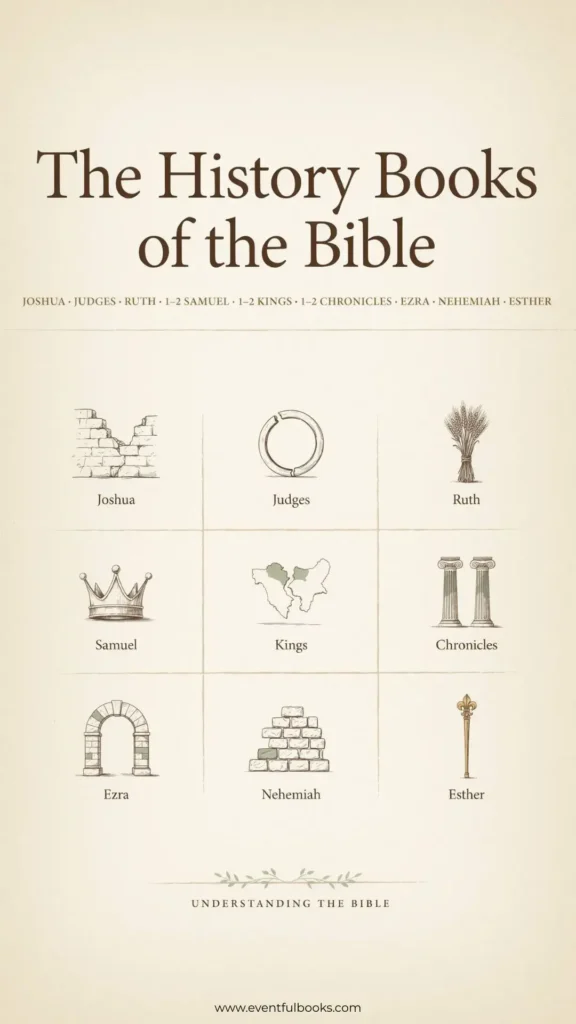
After the Law comes the story of what actually happened. These books follow the Israelites as they enter the Promised Land, set up a kingdom, rise to greatness under kings like David and Solomon, and then slowly fall apart. It’s full of drama, battles, betrayal, and unexpected heroes.
6. Joshua
Joshua takes over from Moses and leads the Israelites into the Promised Land. The Battle of Jericho (where the walls came tumbling down) happens here. It’s a book about courage, following through on promises, and the reality of actually claiming what God said was theirs.
7. Judges
Things get messy fast. Without a strong leader, the Israelites keep falling into the same cycle: they forget God, things go wrong, they cry out for help, God sends a judge (a hero-leader) to rescue them — then they forget again. Samson, Deborah, and Gideon all show up here.
8. Ruth
A short, gorgeous story tucked between all the war and chaos. Ruth is a young widow from a foreign land who chooses to stay with her mother-in-law Naomi and trust her God. It’s a book about loyalty, kindness, and redemption — and honestly one of the most beautiful in the whole Bible.
9. 1 Samuel
Israel decides they want a king like every other nation. Enter Saul, their first king — and David, the shepherd boy who takes on Goliath and is eventually anointed to replace him. The rivalry between Saul and David is gripping, complicated, and deeply human.
10. 2 Samuel
David is king now — and his reign is a rollercoaster. He’s a gifted leader and a man after God’s own heart, but he also makes some huge, devastating mistakes. 2 Samuel doesn’t sugarcoat any of it, which is part of what makes it so honest and relatable.
11. 1 Kings
Solomon, David’s son, builds the famous Temple in Jerusalem and becomes the wisest (and wealthiest) king Israel ever had. But by the end of his reign things start to crack, and after his death the kingdom splits into two: Israel in the north and Judah in the south.
12. 2 Kings
The story of both kingdoms slowly unraveling. King after king fails to lead the people faithfully, and the prophets keep warning them. Eventually it all collapses — Israel falls to Assyria, and Judah is taken captive to Babylon. It’s heartbreaking, but important.
13. 1 Chronicles
Think of Chronicles as a “director’s cut” of Samuel and Kings. Written after the exile, it retells Israel’s history with a focus on the Temple, worship, and David’s legacy — encouraging a people who had lost everything to remember who they were.
14. 2 Chronicles
Picks up where 1 Chronicles leaves off, following Solomon’s reign through the fall of Jerusalem. It ends on a note of unexpected hope — a foreign king named Cyrus allows the exiled Israelites to return home and rebuild their temple.
15. Ezra
The exiles are back in Jerusalem and it’s time to rebuild. Ezra is a priest and scribe who leads a wave of returning Israelites and works hard to restore both the Temple and the community’s commitment to God’s law. A book about fresh starts and spiritual renewal.
16. Nehemiah
Nehemiah hears that Jerusalem’s walls are still in ruins and refuses to accept it. He gets permission from the Persian king, goes back to Jerusalem, and organizes the entire community to rebuild — despite opposition, threats, and sabotage. It’s a masterclass in leadership and perseverance.
17. Esther
A young Jewish woman becomes queen of Persia — and ends up being the only one who can save her people from genocide. Esther is brave, strategic, and inspiring, and her story is one of the most beloved in the entire Old Testament. (Fun fact: God’s name is never mentioned, but his presence is everywhere.)
Poetry & Wisdom
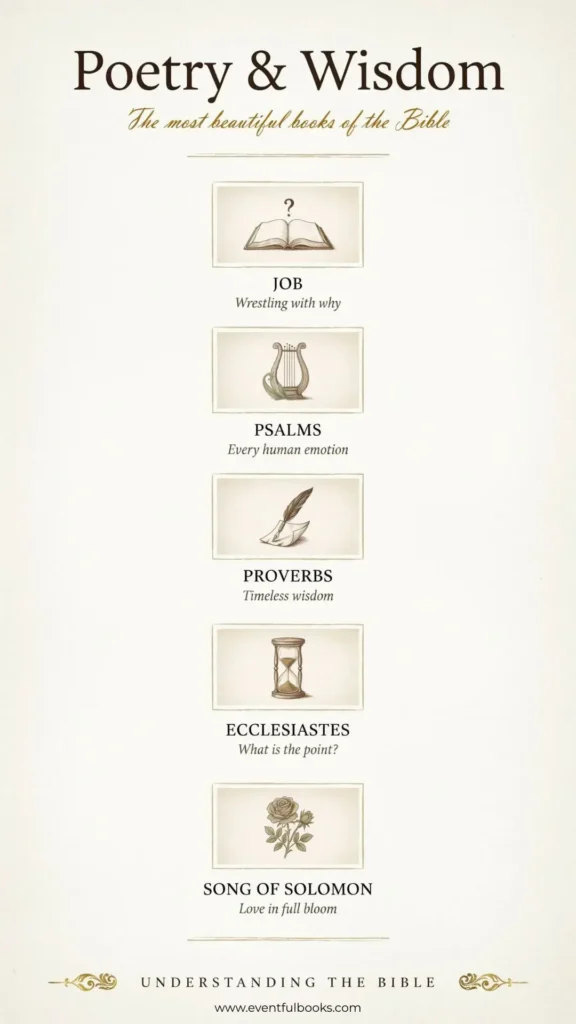
Right in the middle of the Old Testament, the tone completely shifts. These books aren’t about history — they’re about the inner life. Grief, wisdom, joy, love, doubt, beauty. They read less like a story and more like a journal, a prayer, or a song. They’re also where a lot of the most quoted Bible verses come from.
18. Job
Job is a good man who loses everything — his family, his wealth, his health — and spends the book wrestling with why. His friends try to give him easy answers. God shows up in a whirlwind. It’s one of the oldest and most profound books in the Bible, asking questions that still don’t have easy answers today.
19. Psalms
150 poems and songs, mostly written by David. They cover every single human emotion — joy, grief, fear, anger, gratitude, desperation. Psalms is the part of the Bible people turn to when they don’t know what else to say to God. Psalm 23 (“The Lord is my shepherd”) lives here.
20. Proverbs
Short, punchy, incredibly practical wisdom sayings — mostly from Solomon. Topics include friendship, money, hard work, relationships, self-control, and what it actually looks like to live well. It’s like the Bible’s version of a wisdom journal, and so many of its lines are genuinely timeless.
21. Ecclesiastes
Written by “the Teacher” (traditionally Solomon), Ecclesiastes is philosophical and surprisingly raw. It asks: what’s the point of any of this? What makes life meaningful? It cycles through different answers — wealth, pleasure, work, wisdom — and lands somewhere honest and unexpectedly beautiful. One of the most unique books in the Bible.
22. Song of Solomon
Yes, it’s a love poem — and a pretty passionate one. Song of Solomon celebrates romantic love between two people, and is also read as a picture of God’s love for his people. It’s poetic, sensory, and honestly just gorgeous. Don’t skip it.
The Major Prophets
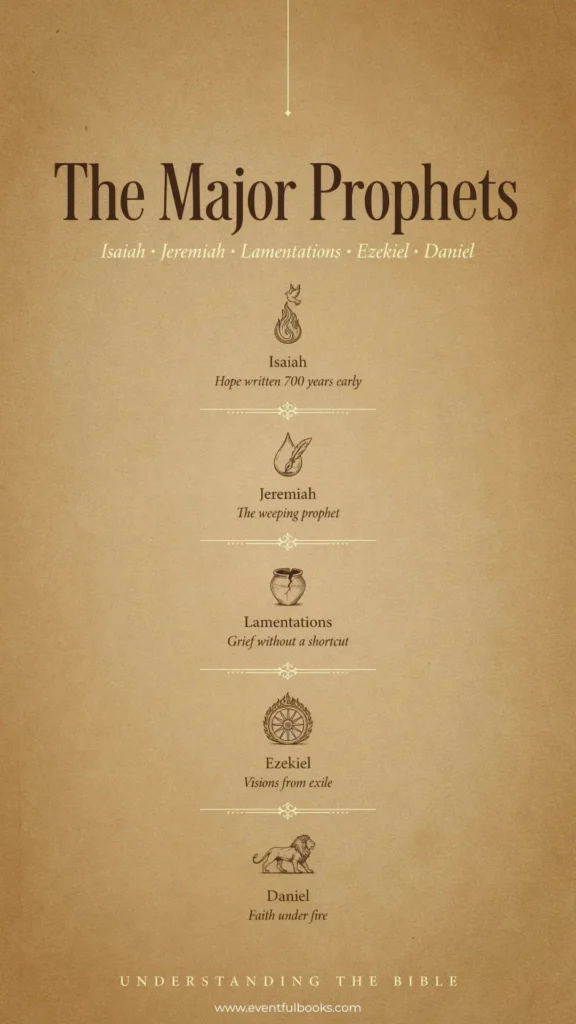
The “major” prophets are called that because of their length, not because they’re more important. These are the big, weighty books — full of warnings, visions, and some of the most stunning promises in all of Scripture. They were written during some of the darkest periods in Israel’s history, and they spoke of a hope that was still to come.
23. Isaiah
Isaiah is often called the “fifth gospel” because it contains so many prophecies about Jesus — written 700 years before his birth. It’s a sweeping book that swings between devastating warnings and breathtaking hope. Isaiah 53, describing a “suffering servant,” is one of the most powerful chapters in the whole Bible.
24. Jeremiah
Jeremiah was called to deliver a message no one wanted to hear — that Jerusalem would fall — and he delivered it faithfully for decades while being mocked, imprisoned, and ignored. His honesty about his own pain and doubt makes him one of the most human voices in Scripture.
25. Lamentations
Written in the aftermath of Jerusalem’s destruction, Lamentations is exactly what it sounds like: a book of lament. It doesn’t rush past the grief or offer quick comfort. But right in the middle — chapter 3 — there’s a famous turn: “His mercies are new every morning.” One of the most honest books in the Bible.
26. Ezekiel
Ezekiel is vivid, strange, and visionary. He was a priest-turned-prophet living in exile in Babylon, and his book is full of wild imagery — wheels within wheels, a valley of dry bones coming to life. Beneath the unusual visions is a powerful message: God hasn’t abandoned his people.
27. Daniel
Daniel is a young man taken to Babylon who refuses to compromise his faith — even when it means being thrown into a lion’s den. The first half reads like an adventure story; the second half is apocalyptic prophecy full of visions and symbols. A book about what it looks like to stay faithful when everything around you is telling you not to.
The Minor Prophets
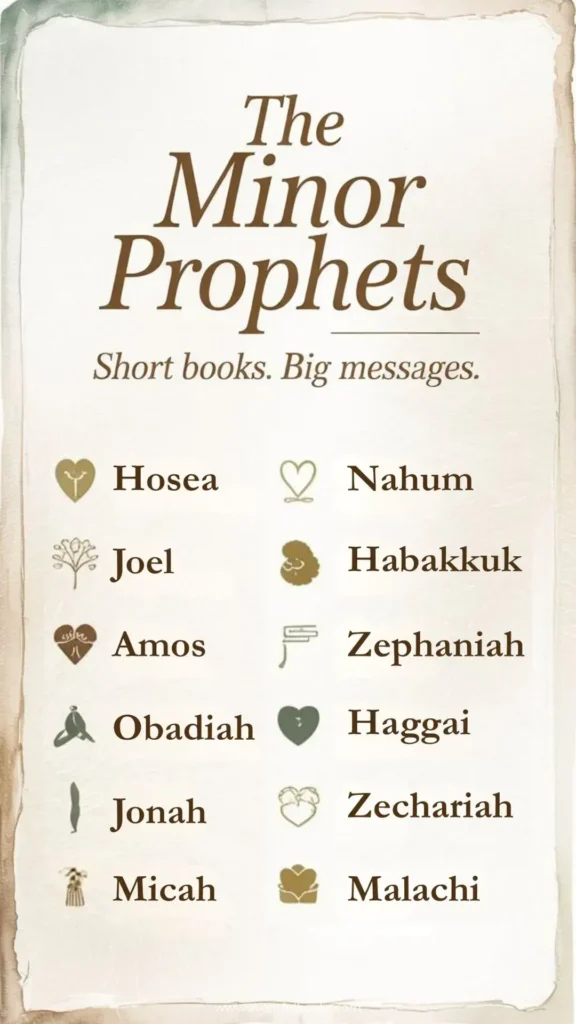
Short books, big messages. The minor prophets are often overlooked, but they’re full of powerful words about justice, faithfulness, and hope. Each one was written in a specific historical moment — but what they said still lands today.
28. Hosea
God tells Hosea to marry a woman who will be unfaithful to him — and then to keep loving her anyway. It’s a living picture of how God feels about Israel’s repeated turning away, and how far he’s willing to go to bring them back. Heartbreaking and hopeful all at once.
29. Joel
A plague of locusts becomes the backdrop for a powerful call to return to God. Joel promises that if the people turn back, God will restore what was lost — and will pour out his Spirit on everyone. The apostle Peter quotes Joel on the day of Pentecost in Acts.
30. Amos
Amos was a shepherd — not a trained prophet — who was called to speak hard truths to a prosperous but unjust society. He’s especially vocal about the gap between the rich and poor, and how empty religious practice means nothing without genuine justice and care for others.
31. Obadiah
The shortest book in the Old Testament — just 21 verses. It’s a message of judgment directed at Edom, a neighboring nation that gloated when Israel fell. A brief but pointed reminder that pride and cruelty don’t go unanswered.
32. Jonah
Yes, the big fish story is real — but Jonah is about so much more than that. It’s the story of a prophet who tries to run from his calling, gets swallowed by a fish, and then sulks when God shows mercy to the very people Jonah wanted judged. It’s funny, uncomfortable, and incredibly relatable.
33. Micah
Micah speaks truth to power — calling out corrupt leaders, false prophets, and social injustice. But it’s also the book that predicts Jesus will be born in Bethlehem (Micah 5:2). And it contains one of the most quoted summaries of the whole Bible: “Act justly, love mercy, walk humbly with your God.”
34. Nahum
Remember Nineveh — the city Jonah reluctantly warned? About 100 years after they repented, they went back to their violent, oppressive ways. Nahum announces their coming judgment. It’s a sobering reminder that mercy has limits and justice will come.
35. Habakkuk
Habakkuk basically argues with God — “Why do you let evil go unpunished? Why aren’t you doing anything?” And God answers. It’s one of the most honest dialogues in Scripture, and it ends with one of the most stunning declarations of faith: praising God even when everything has fallen apart.
36. Zephaniah
Zephaniah warns of a coming “day of the Lord” — a time of judgment. But the book ends with one of the most tender images in all of Scripture: God rejoicing over his people with singing. The shift from warning to warmth is genuinely surprising and beautiful.
37. Haggai
The people have returned from exile but have gotten distracted building their own comfortable lives while God’s temple sits unfinished. Haggai delivers a short, practical message: get your priorities right and finish what you started. Specific, direct, and surprisingly applicable today.
38. Zechariah
Full of night visions and symbolic imagery, Zechariah speaks both to the immediate moment (encouraging the people to rebuild) and to the distant future. It contains more messianic prophecies about Jesus than almost any other minor prophet, including the entry into Jerusalem on a donkey (Zechariah 9:9).
39. Malachi
The very last book of the Old Testament — and then 400 years of silence before the New Testament begins. Malachi addresses a people who have grown spiritually lazy and cynical, and ends with a promise: a messenger is coming to prepare the way for something completely new. That’s exactly what happens when you turn the page to Matthew.
If reading through the Bible feels overwhelming, our Understanding The Bible study guide series was made for exactly that. Each guide breaks a book of the Bible into daily passages — with the scripture, the story in plain English, deeper insights, and reflection questions to make it personal. Plus a Sabbath spread at the end of each week to carry forward what moved you. It’s the Bible, made manageable — and meaningful.
👉 Shop the Understanding The Bible series on Amazon